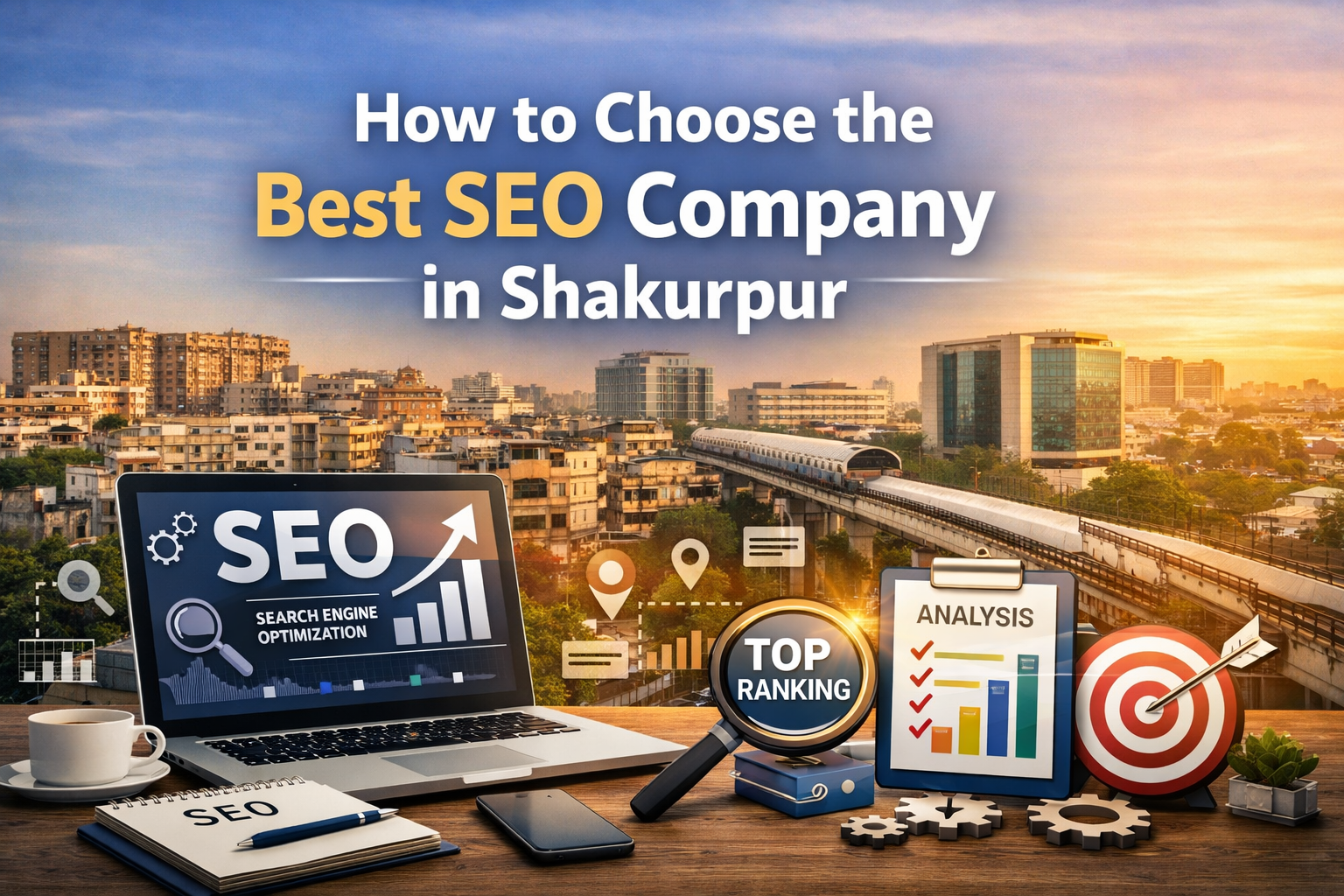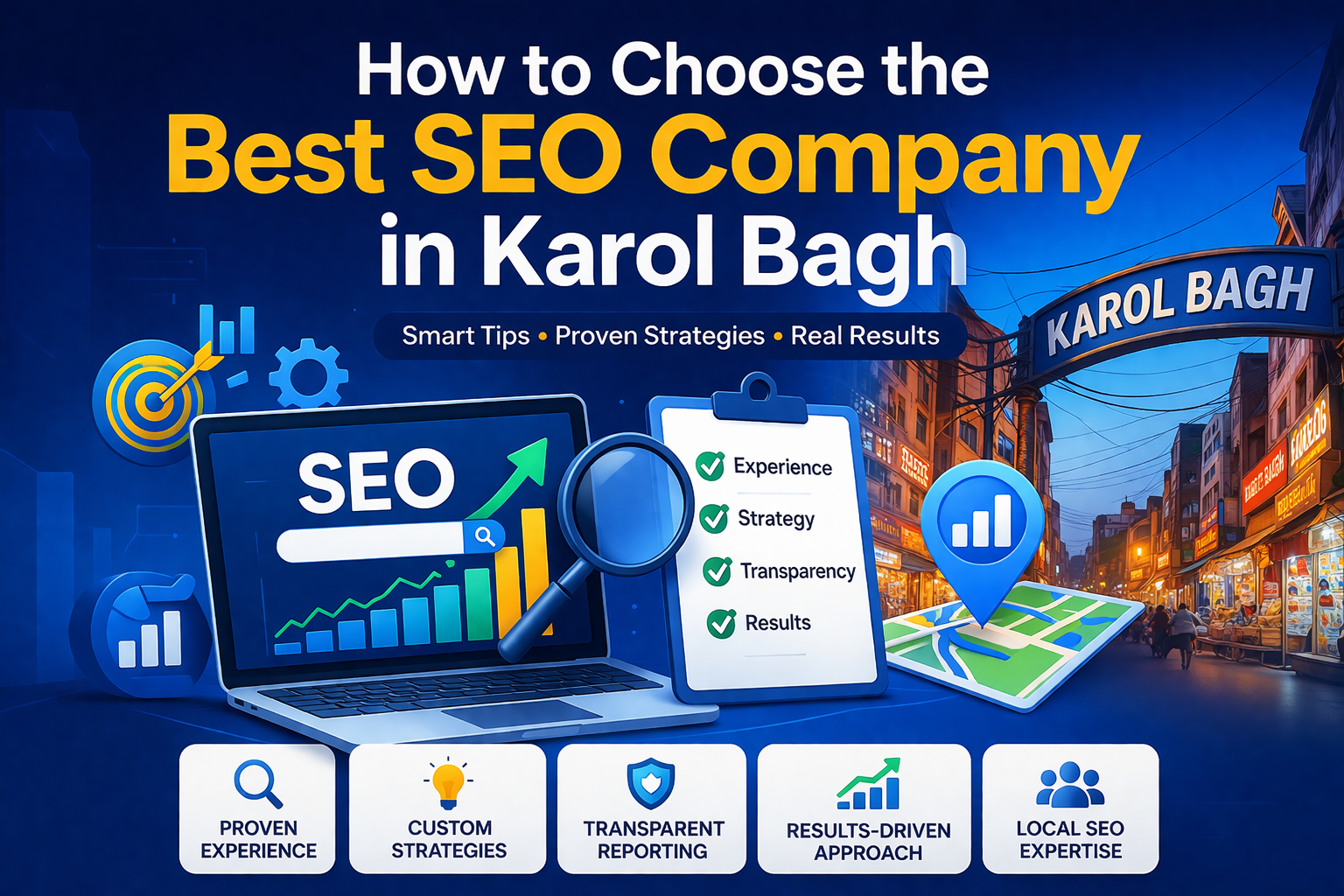
How to Choose the Best Website SEO Company in Delhi

Finding the best website SEO company in Delhi is not easy—and honestly, it shouldn’t be. SEO directly affects your traffic, leads, and brand trust. Choosing the wrong agency can hurt your website more than doing no SEO at all. Delhi is a competitive digital market. Almost every business wants to rank on Google, but only a few do it the right way. That’s why choosing a professional SEO company in Delhi requires logic, research, and a clear understanding of how SEO really works. This guide will help you choose wisely, without falling for unrealistic promises or marketing noise. Why SEO Is a Serious Investment (Not a Monthly Expense) SEO is not a one-time task or a “cheap monthly service.” It is a long-term growth strategy. Google itself explains that ranking improvements take time and depend on content quality, website experience, and trust signals. A reliable SEO company in Delhi focuses on: Sustainable rankings User-first optimization Long-term authority If an agency talks only about fast results, they are ignoring how Google actually works. Define Your SEO Goals Before Contacting Any Agency Before searching for the best SEO agency in Delhi, get clarity on your goals. Ask yourself: Do I want local customers or national traffic? Do I need leads, calls, or brand visibility? Is my website new or already established? A professional SEO company in Delhi will align its strategy with your business goals. If they offer the same SEO package to everyone, that’s a warning sign. SEO is not one-size-fits-all. What Website SEO Services in Delhi Should Include Not all SEO services are equal. Proper professional SEO company in Delhi should cover multiple layers of optimization. Website SEO Audit (Foundation First) An SEO audit identifies: Technical errors Indexing problems Slow-loading pages Poor site structure Google recommends fixing technical issues before pushing content or backlinks. Skipping this step leads to weak results. On-Page SEO Optimization On-page SEO helps search engines understand your content clearly. It includes: Optimized titles and meta descriptions Proper use of headers (H1, H2, H3) Internal linking Content relevance A strong SEO company in Delhi optimizes pages for users first, not just keywords. Content That Solves Real Problems Content works only when it helps users. The professional SEO company in Delhi focuses on: Search intent Clear explanations Easy readability Logical structure Google’s Helpful Content guidelines clearly state that content should be written for humans, not algorithms. Technical SEO (The Invisible Hero) Technical SEO improves: Website speed Mobile usability Core Web Vitals Secure browsing Users may not see technical SEO, but Google definitely does. Ethical Link Building Backlinks still matter—but quality matters more than quantity. A professional SEO company in Delhi earns links through: Authority content Genuine outreach Brand mentions Spammy links lead to penalties. Google has said this clearly in its link spam updates. How to Identify the Best SEO Agency in Delhi Let’s talk real signals. Transparency Is Non-Negotiable The best SEO agency in Delhi explains: What work they will do Why it matters How success will be measured If reporting feels confusing, the strategy probably is too. They Set Honest Expectations SEO takes time. There is no shortcut around that. Avoid agencies that guarantee: #1 rankings Overnight traffic “Google-approved secrets” Google does not approve agencies. That claim alone is a red flag. They Focus on Business Growth, Not Vanity Metrics Traffic without conversions means nothing. A smart SEO company in Delhi tracks: Organic leads User behavior Conversion paths Rankings matter, but revenue matters more. Questions You Must Ask Before Hiring an SEO Always ask these: How do you follow Google’s SEO guidelines? What does your SEO process look like month by month? How do you handle algorithm updates? What KPIs do you track? How do you report progress? Clear answers = professional mindset. Common Red Flags You Should Avoid Stay away if an agency: Hides its methods Uses copied case studies Pushes bulk backlinks Talks more than it listens SEO should feel strategic, not chaotic. Local SEO Expertise Is Critical in Delhi Local searches drive high-intent traffic. The professional SEO company in Delhi understands: Google Business Profile optimization Local citations Reviews and reputation signals Area-based keywords Local SEO brings customers who are ready to take action. SEO Pricing: Think Value, Not Cost Cheap SEO often leads to: Automated tools Thin content Low-quality links A professional SEO company in Delhi charges based on effort, research, and experience. SEO done right pays for itself over time. How the Best SEO Company in Delhi Measures Success Success is not just rankings. It includes: Consistent organic growth Better engagement Lead quality improvement Brand authority SEO should support your business, not just your analytics dashboard. Trust, Experience, and Consistency Matter Most Google evaluates websites using E-E-A-T: Experience Expertise Authoritativeness Trust The same logic applies when choosing an SEO partner. The best SEO agency in Delhi builds trust through honest work, clear communication, and steady results—not hype. Final Thoughts Choosing the right best SEO company in Delhi is a business decision, not a marketing experiment. Take your time. Ask smart questions. Focus on long-term value. Good SEO builds visibility and trust. Bad SEO destroys both. Frequently Asked Questions (FAQs) How do I choose the best SEO company in Delhi? To choose the best website SEO company in Delhi, focus on transparency, experience, and strategy. A reliable SEO company follows Google’s guidelines, explains its process clearly, and prioritizes long-term growth instead of unrealistic ranking guarantees. How long do SEO services in Delhi take to show results? Website SEO services in Delhi usually take around 3 to 6 months to show noticeable results. The timeline depends on competition, website health, and industry type. A professional SEO company in Delhi focuses on consistent and sustainable improvements. What services should a professional SEO company in Delhi provide? A professional SEO company in Delhi should offer website SEO audits, on-page SEO, technical SEO, content optimization, ethical link building, and local SEO. These services work together to improve rankings, visibility, and lead quality. Why is local SEO important when
How to Do Keyword Research for SEO Using Free & Paid Tools

Keyword research for SEO is not optional anymore. It decides whether your content attracts the right audience or disappears quietly on page five of Google. Many websites fail because they write first and research later. Smart SEO works the other way around. This article explains how to do keyword research for SEO using free and paid keyword research tools, following search engine guidelines and real-world SEO practices. Everything here focuses on clarity, usefulness, and long-term trust—not shortcuts. What Keyword Research for SEO Really Means Keyword research for SEO means identifying the exact terms people search for when they want information, solutions, or services. These keywords reveal user intent, demand, and competition. Search engines want to show the best answer to every query. Keywords help them understand whether your content matches that intent. In simple terms, keyword research helps you: understand what users want create relevant content compete realistically avoid wasting effort Without it, SEO becomes guesswork. Why Keyword Research Still Controls SEO Success Search algorithms evolve, but keywords remain essential. Google understands meaning better now, but it still relies on keywords to connect queries with content. Keyword research helps you: avoid topics nobody searches for focus on achievable rankings build topical authority plan content with purpose SEO rewards relevance and consistency. Keyword research delivers both. Search Intent: The Most Ignored SEO Factor Before choosing any keyword, ask one question: why is someone searching this? Most searches fall into four intent types: Informational Commercial Transactional Navigational For example: “keyword research for SEO” signals learning intent “best keyword research tools” signals comparison intent If your content doesn’t match intent, rankings won’t last—even if you rank temporarily. Google tracks satisfaction, not just clicks. How to Do Keyword Research for SEO: Complete Process Let’s break keyword research into a clear, repeatable workflow. Step 1: Identify Seed Keywords Seed keywords are basic phrases related to your topic. They act as starting points for research tools. Examples: keyword research for SEO keyword research tools SEO keyword research guide Use a small list. Too many seeds create noise and confusion. Step 2: Validate Ideas With Free Keyword Research Tools Free tools offer reliable insights and help you avoid investing in weak ideas. Google Keyword Planner Google Keyword Planner helps generate keyword ideas and shows approximate search demand. Use it to: find keyword variations understand interest levels spot related topics Exact numbers matter less than consistency and relevance. Google Search Console Google Search Console shows keywords that already trigger impressions for your site. This data helps you: find keywords close to page one improve existing content identify missed opportunities Often, small optimizations bring noticeable gains. Google Trends Google Trends shows keyword popularity over time. It helps you: compare similar keywords detect seasonal behavior avoid declining topics SEO is long-term. Trends help protect future traffic. Step 3: Go Deeper With Paid Keyword Research Tools Paid keyword research tools provide competitive insights that free tools cannot. They help you evaluate: keyword difficulty SERP competition ranking patterns Ahrefs Ahrefs is strong in competitor keyword research and SERP analysis. It helps you: see what competitors rank for identify keyword gaps analyze content strength Instead of guessing, you learn from real data. SEMrush SEMrush focuses on keyword intent, ranking trends, and topic research. It helps with: prioritizing keywords analyzing SERP features tracking competition Paid tools improve decisions, but strategy still matters most. Step 4: Perform Competitor Keyword Research Competitor keyword research reveals opportunities faster than brainstorming alone. Analyze: top-ranking pages keyword usage patterns content depth and clarity If competitors rank with thin or outdated content, you have room to outperform them. SEO often rewards improvement, not invention. Step 5: Target Long-Tail Keywords for Better Conversions Long-tail keywords are longer and more specific phrases. They usually: face lower competition show clearer intent convert better Examples include detailed questions and step-based searches related to keyword research for SEO. Long-tail keywords may bring less traffic, but they bring qualified users. Step 6: Analyze SERPs, Not Just Keyword Scores Keyword difficulty scores help, but they don’t replace manual analysis. Always review: who ranks on page one content quality and length intent alignment If page one consists of strong authority sites with deep content, ranking will take time and effort. SEO works best when expectations stay realistic. Step 7: Group Keywords by Topic Modern SEO values topical authority. Instead of creating multiple weak articles, group related keywords into one comprehensive page. For example: keyword research for SEO SEO keyword research guide keyword research tools One strong page builds trust faster than scattered content. Step 8: Plan Content Structure Before Writing Before writing, map keywords to sections. Decide: main topic focus supporting subtopics natural keyword placement Planning prevents over-optimization and improves readability. Good SEO content feels natural because it’s structured properly. Step 9: Use Keywords Naturally in Content Keyword placement matters, but forcing keywords damages trust. Use keywords in: headings introduction relevant body sections If a sentence feels unnatural, rewrite it. Readability always wins. Google follows user behavior, not keyword density. Common Keyword Research Mistakes to Avoid Many SEO failures start with poor research. Avoid: chasing high-volume keywords blindly ignoring search intent relying on a single tool keyword stuffing skipping competitor analysis SEO rewards precision and patience, not shortcuts. How Keyword Research Supports Long-Term SEO Growth Keyword research for SEO aligns your content with real user needs. When users find what they want: they stay longer they engage more they trust your site Search engines track these signals. Trust grows when usefulness stays consistent. Keyword Research and Content Quality Must Work Together Keyword research does not replace good writing. It supports: clarity structure relevance Search engines rank content that satisfies users. Keywords guide direction, but value drives results. When to Update Keyword Research Keyword research is not a one-time task. Update it when: rankings drop competitors improve search behavior changes Search trends evolve. Smart SEO adapts. Keyword Research Is Strategy, Not a Hack There is no shortcut. Effective keyword research relies on: understanding users analyzing competition making informed
SEO Traffic Boost: The One Change That Can Increase Traffic Overnight

Every website owner wants more traffic. Some expect slow, steady growth. Others dream of waking up to a sudden flood of visitors from Google. While SEO usually takes time, certain actions can deliver an SEO traffic boost much faster than most people expect. No shortcuts. No risky tricks. Just smart optimization based on how search engines actually work. In this guide, you’ll learn quick SEO fixes for more traffic, technical SEO fixes that unlock hidden performance, and the fastest way to improve SEO without putting your site at risk. If you’ve ever wondered how to increase traffic in one day, this article will give you realistic answers. The Truth About “Overnight” SEO Results Let’s clear the air. SEO is not instant. Google needs time to crawl, index, and evaluate content. This process is explained in Google Search Central’s official documentation on how Search works. Rankings change after Google processes new signals, not the second you press “publish”. However — and this is important — many websites already have: Decent content Existing authority Indexed pages But hidden technical mistakes block their performance. When those mistakes are fixed, Google can reprocess the site quickly. In these cases, instant SEO improvement is not a fantasy. It’s a correction. Think of it like a roadblock on a highway. Cars are ready to move, but something is in the way. Remove the obstacle, and traffic flows again. That’s how an SEO traffic boost can happen fast. The #1 SEO Change That Can Increase Traffic Overnight Fix Crawl and Indexing Issues If Google cannot crawl or index your pages, your content won’t appear in search results — no matter how good it is. This is the most powerful technical SEO fix and often the fastest way to improve SEO. Common indexing problems include: Robots.txt accidentally blocking important pages Noindex tags added by mistake Broken internal links Wrong canonical tags Redirect loops or long redirect chains Google clearly states that pages must be crawlable and indexable to be eligible for ranking. When you fix these issues and request reindexing in Google Search Console, Google can reprocess your pages quickly. Many websites lose traffic overnight due to a tiny technical change. Fix that change, and traffic can return just as fast. That’s a real SEO traffic boost — not a trick. Why Technical SEO Fixes Create Fast Results Content-based SEO improvements take time. Technical SEO fixes remove barriers. When barriers disappear, existing content can finally perform. This is why technical SEO fixes are often responsible for instant SEO improvement. Examples include: Restoring accidentally deindexed pages Fixing canonical tags that pointed to the wrong URL Repairing broken sitemap submissions Correcting server errors (5xx pages) Solving mobile usability issues These are small SEO changes that boost traffic because they let Google access what was already there. Quick SEO Fixes for More Traffic Let’s explore practical actions that increase website traffic fast without rebuilding your entire site. 1) Improve Page Speed Google confirmed that page experience and Core Web Vitals influence rankings. Slow websites frustrate users and waste crawl budget. Quick improvements include: Compressing oversized images Enabling browser caching Minifying CSS and JavaScript Reducing unnecessary plugins Using faster hosting When pages load faster: Users stay longer Bounce rates drop Engagement improves These signals support better rankings. This is one of the easiest quick SEO fixes for more traffic. 2) Repair Broken Internal Links Internal links guide both users and search engine crawlers. Broken links interrupt navigation and weaken site structure. Fixing them: Improves crawl efficiency Distributes page authority correctly Helps Google discover deeper pages Once fixed, Google can re-crawl your site more effectively, often leading to ranking recovery. Another small SEO change that boosts traffic. 3) Rewrite Title Tags for Higher Clicks Sometimes your page ranks — but searchers don’t click. A weak title tag wastes ranking potential. Optimizing title tags with: Clear intent Natural keyword placement Strong value message can increase click-through rate. Higher CTR sends positive engagement signals, which can improve Google rankings quickly. This is a simple instant SEO improvement that doesn’t require writing new content. 4) Refresh Existing Content Google rewards freshness when it adds value. Updating old content by: Adding current information Improving readability Updating screenshots or steps Strengthening internal linking can revive lost rankings. Because the URL already has authority, refreshed pages often perform faster than brand-new ones. A proven small SEO change that boosts traffic. 5) Match Search Intent Even well-written content fails if it doesn’t match what users want. Search intent usually falls into: Informational Navigational Commercial Transactional If your content format doesn’t match intent, rankings suffer. Adjusting structure, headings, and answers to align with intent helps improve Google rankings quickly. This is core Helpful Content optimization. The Fastest Way to Improve SEO for Existing Websites If your website already has some authority, these steps create rapid impact: Audit Google Search Console for indexing errors Fix robots.txt and noindex mistakes Repair broken internal links Improve page speed Refresh top-performing content Rewrite weak title tags Submit updated XML sitemap Request reindexing This combination is often the fastest way to improve SEO without waiting months. How to Increase Traffic in One Day: Realistic Scenarios Let’s talk real situations where traffic returns fast. Accidentally added noindex → removed → rankings restored Robots.txt blocked key pages → fixed → pages reindexed Canonical pointed wrong URL → corrected → visibility returned Sitemap broken → resubmitted → faster discovery Internal links deleted → restored → crawl flow recovered If your site had rankings before, fixing these problems can increase website traffic fast — sometimes within one day. That’s how to increase traffic in one day the right way. Avoid Fake “Instant SEO Improvement” Services Some agencies promise overnight rankings using: Bulk backlink blasts Keyword stuffing AI-spun articles Fake traffic bots Google’s Spam Policies warn clearly against these practices. They may cause short-term spikes, followed by long-term penalties. Real SEO traffic boost comes from solving real problems — not gaming the system. Why E-E-A-T Matters After Quick Wins Quick
Google Indexed Your Website but Rankings Didn’t Move? Here’s Why

You opened Google Search Console and saw the good news. Your pages are indexed. Google knows your website exists. Then you waited for rankings. You waited for impressions. You waited for clicks. Nothing happened. If your website indexed but not ranking, you are not alone. This situation happens to new websites, growing blogs, and even established businesses. Indexing means Google stored your page in its database. Ranking means Google decided your page deserves visibility in search results. These are different processes. In this guide, you will learn: Why your website indexed but not ranking Why Google indexed but not ranking Why indexed pages not showing in search Why Google indexing but no ranking How to fix website indexed but not ranking Everything here follows real SEO practices and Google’s official guidance. No shortcuts. No guesswork. Indexing vs Ranking: The Real Difference Indexing means Google discovered your page and added it to its index. Ranking means Google selected your page to appear for search queries. Google itself explains that indexing does not guarantee ranking. Pages must prove relevance, quality, and trust before they earn positions. Source: Google Search Central Documentation. So when people say Google indexed my site but no rankings, it usually means Google has not seen enough ranking signals yet. Why Is My Website Indexed but Not Ranking? Several real factors cause this situation. Let’s break them down clearly. 1. Your Website Is New New websites often get indexed quickly. Rankings take more time. Google observes: Content consistency User engagement Site stability Trust signals During this period, pages may show as indexed with website indexed no impressions. Nothing is broken. Google is collecting data. What to do Publish helpful content regularly Build clear internal linking Add About and Contact pages Stay consistent Time and quality build trust. 2. Content Lacks Competitive Depth If your content repeats what already exists, Google sees no reason to rank it higher. This leads to Google indexed but not ranking. Google’s quality systems reward content that shows: Experience Expertise Authoritativeness Trustworthiness (E-E-A-T from Google’s Search Quality Evaluator Guidelines) What to do Add real examples Explain topics deeply Share practical insights Avoid filler text Helpful content earns rankings. 3. No Authority Signals Backlinks still act as trust indicators. Without them, Google has limited external validation. Result: Google indexing but no ranking. What to do Earn genuine backlinks Publish link-worthy resources Build partnerships Get listed in relevant directories Avoid paid or spam links. Google detects manipulation. 4. Wrong Keyword Targeting Some pages target keywords with no real search demand. Pages get indexed but receive no impressions. This looks like indexed pages not showing in search. What to do Research keywords before writing Target long-tail queries Match real search intent SEO starts with understanding demand. 5. Weak Internal Linking If your own site barely links to a page, Google considers it low priority. What to do Link new content from older pages Use descriptive anchor text Build topic clusters Internal links guide Google’s crawl paths. 6. Poor Page Experience Google evaluates: Page speed Mobile usability Core Web Vitals Slow or unstable pages reduce ranking potential. Source: Google Page Experience Documentation. What to do Compress images Improve hosting Reduce heavy scripts Optimize mobile layout Better experience improves ranking signals. 7. Thin or Duplicate Pages Multiple similar pages confuse Google. It may choose none to rank. Result: website indexed but not ranking. What to do Merge overlapping content Remove thin pages Expand key pages One strong page beats five weak ones. 8. Search Intent Mismatch If your content format does not match user intent, engagement drops. Google reacts by limiting visibility. What to do Analyze top-ranking pages Match content structure Improve clarity and usefulness Intent alignment increases ranking potential. 9. Technical SEO Mistakes Even indexed pages can suffer from: Incorrect canonical tags Duplicate metadata Crawl inefficiencies What to do Inspect URLs in Search Console Fix canonical errors Resolve indexing warnings Source: Google Search Console Indexing Guide. How to Fix Website Indexed but Not Ranking Now let’s move to solutions. Step 1: Improve Content Quality Ask yourself: Does this page fully answer the query? Does it offer unique value? Does it show experience? If not, rewrite and improve. Step 2: Strengthen Trust Signals Add: Author information About page Contact details Business information Trust is visible. Google looks for it. Step 3: Build Topic Authority Create related content around your main topic. Example cluster: How Google indexing works Common ranking factors SEO checklist for new sites Topical depth increases ranking probability. Step 4: Earn Backlinks Focus on: Guest posting Resource outreach Brand mentions Authority grows over time. Step 5: Improve Engagement Short paragraphs Clear headings FAQ sections Helpful visuals Good engagement sends positive signals. Step 6: Fix Technical SEO Submit sitemap Repair crawl errors Improve Core Web Vitals Ensure mobile usability Strong foundations support rankings. Step 7: Target Long-Tail Keywords Use phrases like: Why is my website indexed but not ranking Google indexed my site but no rankings How to fix website indexed but not ranking Long-tail queries bring faster visibility. How Long Does Ranking Take After Indexing? Google confirms that ranking improvements may take weeks or months after quality changes. Source: Google Search Central Blog. SEO is gradual. Consistency wins. Common Myths Indexing does not guarantee ranking.More keywords do not guarantee ranking.Paid backlinks do not guarantee ranking. Google rewards genuine value. Final Thoughts If your website indexed but not ranking, Google is not ignoring you. It simply needs stronger signals of relevance, quality, and trust. Focus on: Better content Better experience Better authority Better consistency Rankings follow effort. Not shortcuts. Frequently Asked Questions (FAQ) Why is my website indexed but not ranking? Google needs stronger relevance, quality, and trust signals before giving your page visible positions. Google indexed my site but no rankings. Is this normal? Yes. New and low-authority sites often stay indexed without rankings until Google gathers enough performance data. Indexed pages not showing in search. What is the reason? Low search demand, weak content depth, or
Why Google Suddenly Stops Sending Traffic (And How to Fix It)

One day your website is pulling clicks, leads, and sales from Google. The next day, everything goes quiet. No impressions. No visitors. Just confusion. If your Google traffic suddenly dropped, you’re not alone. This happens to websites of every size — from small blogs to big brands — every single day. A sudden drop in organic traffic feels scary, especially if your business depends on search visibility. But Google doesn’t randomly remove traffic for fun. Rankings change because signals change. Once you understand the cause, you can fix it. In this guide, you’ll learn: Why website traffic dropped suddenly Why your Google ranking suddenly dropped Why did my Google traffic suddenly drop How to fix sudden drop in website traffic Everything here follows real SEO logic, Google’s official guidelines, and proven industry practices. No guesswork. No fake data. Just clean strategy. Step One: Confirm the Traffic Drop Is Real Before blaming Google, confirm your data. Many website owners panic when the issue is simply a tracking error. Check two tools: Google Search Console → Performance report Google Analytics → Organic traffic If Search Console shows fewer impressions and clicks, the drop is real. If Analytics alone shows a drop, your tracking code may be broken or removed during a site update. Fact: Google Search Console is Google’s official source for search performance data.(Source: Google Search Central Documentation) Always trust Search Console first when diagnosing ranking or visibility issues. Why Did My Google Traffic Suddenly Drop? There isn’t one universal reason. Google uses hundreds of ranking signals. A change in any of them can affect visibility. Below are the most common and proven causes. 1) Google Algorithm Updates Re-evaluated Your Site Google releases core algorithm updates several times a year. These updates reassess content quality, relevance, and trust signals. If your Google ranking suddenly dropped, a core update may have re-scored your pages. Google publicly states that high-ranking content should demonstrate: Experience Expertise Authoritativeness Trustworthiness This framework is known as E-E-A-T.(Source: Google Search Quality Evaluator Guidelines) If your content: Lacks depth Feels copied Offers no unique insight Exists only for keywords Then a core update may push it down. How to fix it Improve content depth Add real experience or case studies Remove thin pages Update outdated articles No hacks. No shortcuts. Quality wins every time. 2) Technical SEO Issues Blocked Google Sometimes Google wants to send traffic, but your site blocks access. Common technical problems: Noindex tags added by mistake Robots.txt blocking pages Broken redirects Server downtime Canonical tag errors Even one wrong tag can cause website traffic dropped suddenly overnight. How to fix it Check Indexing report in Search Console Test important URLs in URL Inspection Verify robots.txt file Resubmit sitemap (Source: Google Search Console Indexing Documentation) Technical SEO is the foundation. If it breaks, rankings fall fast. 3) Manual Actions or Spam Violations If Google detects spam tactics, it may apply a manual action. This directly reduces rankings or removes pages from search. Common triggers: Spam backlinks Keyword stuffing Cloaking Auto-generated content Check: Search Console → Manual Actions If you see a warning, Google explains the problem clearly. How to fix it Remove or disavow spam backlinks Clean low-quality content Follow Google’s Spam Policies Submit a reconsideration request (Source: Google Search Spam Policies) Manual actions are serious, but fully recoverable if cleaned properly. 4) Your Competitors Improved Sometimes you didn’t fail — others just outperformed you. Competitors may have: Better content Stronger backlinks Faster websites Better user experience Google always ranks the most helpful results. If others level up, your sudden drop in organic traffic happens naturally. How to fix it Analyze top-ranking pages Improve content structure Add unique value Strengthen internal linking SEO is not a one-time task. It’s ongoing competition. 5) Your Content Became Outdated Google prioritizes fresh content for many topics. Articles that stay unchanged for years lose relevance. Signs of outdated content: Old statistics Broken links “Latest update” from years ago Missing new trends How to fix it Update facts and figures Add new sections Refresh publish dates Improve formatting (Source: Google Search Central Guidance on Content Freshness) Freshness sends strong relevance signals. 6) Lost Backlinks Reduced Authority Backlinks remain a core ranking signal. If strong sites remove links pointing to you, your authority decreases. This can lead to: Google ranking suddenly dropped Lower impressions Reduced trust signals How to fix it Monitor backlinks in Search Console Reclaim lost links Earn new links through outreach Publish link-worthy content Avoid paid or spam links. Google detects unnatural patterns easily. 7) Poor User Experience Hurt Rankings Google evaluates user experience through: Page speed Mobile usability Core Web Vitals Layout stability If your site became slow after a redesign or plugin update, rankings may slip. How to fix it Test site with PageSpeed Insights Compress images Remove heavy scripts Improve mobile layout (Source: Google Page Experience Documentation) Good UX = higher engagement = stronger rankings. Why Website Traffic Dropped Suddenly After a Redesign Website redesigns often introduce: URL changes Missing redirects Removed pages Broken internal links If not handled properly, Google loses track of your content. How to fix it Implement 301 redirects Update sitemap Fix internal links Test important pages in Search Console Never launch a redesign without an SEO check. How to Fix Sudden Drop in Website Traffic Now let’s build a clean recovery plan. Step 1: Fix Indexing Problems Remove accidental noindex tags Repair robots.txt Resubmit sitemap Inspect affected URLs Step 2: Improve Content Quality Answer real user questions Add practical examples Remove fluff Keep paragraphs short and clear Write for humans first. Google follows humans. Step 3: Strengthen Trust Signals Add About page Add Contact information Add Author bios Cite credible sources Trust matters more than ever. Step 4: Improve Site Experience Fast loading pages Clean navigation Mobile-first layout Happy users send positive engagement signals. Step 5: Build Real Authority Earn editorial backlinks Get brand mentions Publish expert-level content Authority grows slowly but protects rankings long-term. How Long Does Recovery Take? Google
Search Engine Optimization Budget: What You Need to Know

Every business wants to appear on Google’s first page. But here’s the truth most people don’t talk about: ranking isn’t free. It requires planning, consistency, and smart investment. That’s why creating a clear Search Engine Optimization budget is one of the most important steps in digital growth. Some businesses spend too little and see no progress. Others spend blindly and get burned. The right approach is not guessing — it’s SEO budget planning built on real goals, real competition, and real resources. SEO is a long-term SEO investment strategy. Done right, it delivers continuous organic traffic growth and reduces dependency on paid ads. Done wrong, it becomes wasted money. Let’s break down how much does SEO cost, what affects monthly SEO cost, and how much to spend on SEO per month — without hype, fake stats, or shortcuts. Why SEO Budget Planning Matters Google’s own Search Central documentation makes one thing clear: high-quality, helpful, people-first content wins over time. That means SEO success doesn’t come from one-time actions. It comes from ongoing effort. Without proper SEO budget planning, businesses often: Invest too little to compete Hire low-cost providers using risky tactics Stop too early before growth starts Fail to track performance A strong Search Engine Optimization budget aligns spending with business goals. It answers: What traffic level do you need? How competitive is your niche? What content and technical work is required? When budget and strategy match, SEO becomes predictable instead of mysterious. What Does an SEO Campaign Actually Include? Many people ask how much does SEO cost without understanding what they’re paying for. A realistic SEO campaign cost includes: Technical SEO (indexing, site speed, structure) On-page optimization Keyword and topic research Content creation Authority building (link earning & brand mentions) Tracking and reporting Continuous optimization Google publicly confirms that site health, page experience, and helpful content influence rankings. That means SEO work touches both technical and creative areas. Each part requires tools, time, and expertise — which is why pricing varies. How Much Does SEO Cost? There is no fixed price — and anyone selling “one price fits all SEO” is oversimplifying. How much does SEO cost depends on: Industry competition Website size Current SEO health Target location Growth expectations A local plumber competing in one city needs a smaller monthly SEO cost than an online store competing nationally. A brand-new website needs heavier initial work than an established site. Moz’s SEO guidelines and HubSpot’s marketing research both explain that SEO effort scales with competition and content depth. This is why realistic budgets are based on scope — not guesses. The better question is always: What level of SEO investment matches your business goals? Monthly SEO Cost vs One-Time SEO SEO is not a one-time service. Google updates algorithms constantly. Competitors publish daily. User behavior changes. That’s why most serious brands operate with a monthly SEO cost. Monthly SEO typically covers: Publishing new content Technical monitoring Ranking and traffic tracking Content updates Authority growth Continuous improvements One-time SEO setups help as a starting point. But without ongoing work, rankings usually stall or decline. SEO works like fitness. One workout doesn’t build strength. Consistency does. SEO Investment Strategy: Think in Long-Term Returns A smart SEO investment strategy focuses on sustainability. Google’s Helpful Content system prioritizes websites that consistently serve real user value. That means long-term publishing and optimization beat quick hacks every time. Long-term SEO investment delivers: Stable rankings Brand credibility Higher conversion trust Continuous organic traffic growth Lower cost per acquisition over time Paid ads stop when you stop paying. SEO keeps working long after content is published. That’s why SEO becomes a compounding asset inside your Search Engine Optimization budget. How Much to Spend on SEO Per Month? There’s no universal answer to how much to spend on SEO per month — but there are smart ways to decide. Your monthly SEO budget should reflect: Revenue goals Customer lifetime value Competition level Growth timeline Small local businesses can start with modest budgets and scale. Startups often begin lean and grow investment as traction builds. Larger brands need higher consistent budgets to maintain visibility. HubSpot’s marketing data shows consistent content and SEO activity lead to stronger long-term traffic performance. Consistency beats bursts of spending. A smaller steady budget is better than a large budget that stops after three months. SEO and Digital Marketing Budget Alignment SEO works best when integrated into your overall digital marketing budget. SEO supports: Content marketing Social media visibility Brand recognition Conversion optimization Paid campaign performance A balanced strategy typically includes: SEO for sustainable traffic Paid ads for quick visibility Content for authority Analytics for performance tracking When SEO and paid channels work together, ROI improves across the board. How SEO Campaign Cost Drives Organic Traffic Growth The real return on SEO campaign cost is organic traffic growth. Organic traffic: Doesn’t charge per click Builds long-term brand trust Attracts high-intent visitors Scales over time Google confirms organic search remains one of the primary discovery channels online. Businesses investing in SEO gradually reduce dependence on paid ads while increasing brand authority. SEO isn’t cheap — but ignoring SEO is usually far more expensive long-term. Common SEO Budget Planning Mistakes Many businesses waste money due to: Choosing the cheapest SEO provider Expecting instant rankings No defined KPIs No reporting transparency Stopping before results mature Google openly warns against manipulative SEO and unrealistic ranking promises. Real SEO takes time, expertise, and consistency. If someone promises “#1 in a week,” they’re selling fantasy, not strategy. Building Trust Through Transparent SEO Spending Trust is part of E-E-A-T. Transparent budgeting builds confidence inside teams and with clients. Good SEO investment always includes: Clear deliverables Monthly reporting Measurable performance metrics Honest timelines Realistic expectations When spending is clear, SEO becomes a business asset — not a mystery expense. Final Thoughts A Search Engine Optimization budget is not a cost to minimize. It’s a growth system to build. With proper SEO budget planning, a realistic SEO investment strategy, and consistent monthly SEO
Rank Marketo – SEO Services in Lawndale , USA

Rank Marketo is a trusted and performance-driven digital marketing agency helping businesses grow online with proven SEO strategies. If you are looking for the Best SEO services in Lawndale, Rank Marketo is your one-stop solution. With deep market research, advanced tools, and data-driven execution, we help brands dominate search results and convert traffic into real customers across Lawndale. As a professional SEO agency Lawndale, we focus on long-term visibility, brand authority, and measurable growth. Why Choose Rank Marketo for SEO in Lawndale? Choosing the best SEO services in Lawndale is critical for businesses that want consistent leads and strong online presence. Rank Marketo stands out because of its customized SEO planning, transparent reporting, and ROI-focused execution. We don’t follow generic templates. Instead, our SEO consultant in Lawndale team builds strategies aligned with your business goals, competition, and local market behavior. Best SEO Services in Lawndale for Sustainable Growth Rank Marketo provides the Best SEO services in Lawndale tailored for startups, local businesses, and enterprises. Our approach includes: Keyword research focused on buyer intent On-page SEO optimization Technical SEO improvements High-quality backlink building Local SEO for Lawndale searches With our best SEO services Lawndale, your website gains higher rankings, increased organic traffic, and better conversion rates. Businesses trust us as the Best SEO Service Provider in Lawndale because we focus on sustainable, white-hat SEO practices. Trusted SEO Agency Lawndale for All Industries As a leading SEO agency Lawndale, Rank Marketo works with multiple industries including healthcare, real estate, legal, e-commerce, IT services, and local service providers. Our SEO consultant in Lawndale performs deep competitor analysis to ensure your brand outranks others in the Lawndale market. Whether you need local SEO or national reach, our Best SEO services in Lawndale deliver consistent results. SEO Services for Medium Businesses in Lawndale Medium-sized businesses require scalable and cost-effective SEO solutions. Rank Marketo offers specialized SEO services for medium businesses in Lawndale designed to balance budget and performance. Our SEO services for medium businesses in Lawndale focus on: Growth-oriented keyword targeting Content marketing strategies Conversion rate optimization Performance tracking and reporting With our expertise, medium businesses benefit from the best SEO services Lawndale without overspending. Work with an Expert SEO Consultant in Lawndale Having an experienced SEO consultant in Lawndale can make a massive difference in your online success. Rank Marketo provides dedicated SEO experts who understand local trends, Google algorithms, and user behavior. Our SEO consultant in Lawndale ensures: Proper website structure Google-friendly content Local citation optimization Continuous SEO improvements This is why businesses trust Rank Marketo as the Best SEO Service Provider in Lawndale. Affordable SEO Services Cost in USA Lawndale One of the most common concerns is SEO services cost in USA Lawndale. Rank Marketo offers transparent and flexible pricing models based on your goals and competition. Our SEO services cost in USA Lawndale depends on: Website size Target keywords Industry competition Service scope We ensure that our SEO services cost in USA Lawndale delivers maximum ROI, making us the Best SEO Service Provider in Lawndale for value-driven businesses. Why Rank Marketo is the Best SEO Service Provider in Lawndale Rank Marketo has earned its reputation as the Best SEO Service Provider in Lawndale due to: Proven ranking success Ethical SEO practices Customized SEO strategies Dedicated SEO consultant in Lawndale Clear reporting and analytics Our Best SEO services in Lawndale are built to help businesses dominate search engines and outperform competitors. Serving Areas in Lawndale, USA Rank Marketo proudly provides best SEO services Lawndale across all areas including: Central Lawndale North Lawndale South Lawndale Commercial zones Industrial business districts No matter where your business is located, our SEO agency Lawndale ensures local visibility and growth. Conclusion If you are searching for the Best SEO services in Lawndale, Rank Marketo is your trusted digital partner. As a leading SEO agency Lawndale, we provide result-oriented solutions with affordable SEO services cost in USA Lawndale. From startups to established brands, our SEO services for medium businesses in Lawndale are designed to deliver real growth. Choose Rank Marketo – the Best SEO Service Provider in Lawndale – and take your online presence to the next level. FAQs 1. Why should I choose Rank Marketo for Best SEO services in Lawndale? Rank Marketo offers customized strategies, expert SEO consultant in Lawndale, and proven results, making us the trusted choice for Best SEO services in Lawndale. 2. What is the average SEO services cost in USA Lawndale? The SEO services cost in USA Lawndale varies based on project size and competition, but Rank Marketo provides flexible and transparent pricing. 3. Do you offer SEO services for medium businesses in Lawndale? Yes, we specialize in SEO services for medium businesses in Lawndale with scalable solutions focused on long-term growth.
How Google Discover Works and Why It Matters for SEO

Search is no longer just about typing keywords into a box. The way people consume content online has changed dramatically. Today, users expect information to come to them instantly, without effort. Google saw this shift early — and built Google Discover. If you work in SEO and still focus only on ranking blue links in traditional search results, you’re missing a major traffic opportunity. Google Discover SEO allows your content to reach users before they even think about searching. That’s powerful. That’s modern SEO. In this guide, you’ll learn what Google Discover is, how Google Discover works, and why the Google Discover feed has become a must-target channel for content creators, bloggers, and businesses. No exaggeration. No “secret hacks.” Just real explanations and practical strategy. What Is Google Discover? Google Discover is a personalized content feed available inside the Google mobile app and on the Chrome mobile homepage. Instead of showing traditional search results, it presents articles, videos, and news based on a user’s interests and online behavior. Think of Discover as your personal content assistant. You open Google, and content is already waiting for you — no typing required. Users don’t enter queries. Content appears automatically inside the Google Discover feed. Google itself describes Discover as a way for users to “explore content they care about before they search.” That definition comes from Google Search Central — Google’s official documentation platform. The key difference from classic search is simple: Search = user asks Google.Discover = Google anticipates user interest. That one shift changes the SEO game completely. How Google Discover Works Understanding how works becomes easy when you look at three core processes: data collection, interest prediction, and content delivery. 1. Google collects user signals Google analyzes: Search history Browsing behavior YouTube activity App usage Topics users follow Location settings (if enabled) These signals build an “interest profile” for each user. 2. Google predicts content relevance Google’s machine learning systems scan published web content and predict which articles best match each user’s interest profile. The system learns continuously based on user engagement patterns. 3. Google displays content in Discover Selected content appears in the Google Discover feed, refreshed frequently with: Trending stories Fresh articles Evergreen content tied to user interests Unlike traditional search: No query exists No fixed ranking list exists User engagement controls visibility If users click and spend time on your content, Discover shows it more. If they ignore it, visibility drops. It’s a live feedback system. That’s why Discover traffic sometimes spikes suddenly — your content aligned perfectly with timing, relevance, and interest. How the Google Discover Feed Selects Content The Google Discover feed doesn’t work randomly. Google prioritizes content based on several confirmed factors. Freshness Timely content performs well. News, trends, updates, and recent topics get strong visibility. Visual appeal Discover is highly visual. Strong featured images increase click potential. Topic relevance Content must focus clearly on one topic. Broad or unfocused articles perform poorly. Engagement signals If users interact with similar content, Google expands its reach. Google has confirmed that Discover uses many of the same evaluation systems as Google Search, including: Content quality Page experience E-E-A-T (Experience, Expertise, Authoritativeness, Trustworthiness) In simple words: Low-quality content → No Discover visibilityHelpful, original content → Higher chance to appear Discover rewards real value. Why Google Discover Matters for SEO Traditional SEO is built on ranking for keywords. This newer approach focuses on reaching users before they search. That difference opens a completely new traffic source. 1. Mobile-first audience Discover exists almost entirely on mobile devices. Since most global web traffic now comes from smartphones, mobile-friendly content is no longer optional. If your site isn’t mobile-optimized, Discover won’t favor it. 2. Traffic without search queries Users don’t type anything. Your content appears automatically. This means you reach audiences who may never search your keywords at all. That’s passive discovery — and it’s extremely powerful for brand growth. 3. Quality over backlinks Backlinks still help SEO, but Discover focuses more on: Clear writing Helpful information Good structure Strong visuals This gives smaller websites a fair chance to compete with large publishers. 4. Brand recognition Repeated appearance in a user’s Discover feed builds familiarity. Even when they don’t click every time, your brand becomes recognizable. That’s free brand awareness — no ads needed. Google Discover vs Traditional Google Search Let’s make the difference simple. Google Search:User types a query → Google shows ranked results Google Discover:Google predicts interests → Content appears automatically Search is reactive.Discover is proactive. Modern SEO strategies now treat Discover as a parallel traffic channel — not just a bonus feature. What Type of Content Performs Best Based on Google’s guidance and industry experience, Discover performs best with content that is: Fresh and timely Focused on one clear topic Written in an engaging tone Supported by strong images Mobile-friendly Fast-loading Evergreen content also performs well when: It answers common questions It stays updated It matches long-term user interests Thin or copied content rarely succeeds. Discover rewards depth, originality, and usefulness. Google Discover SEO: Core Optimization Strategy There is no “submit to Discover” button. Optimization is about aligning with Google’s quality systems. Write for humans first Google’s Helpful Content system prioritizes people-first content. Solve real problems. Answer real questions. Use strong, honest headlines Avoid clickbait. Promise real value. Weak: “SEO Tips”Strong: “How Google Discover Works and Why It Matters for SEO” Add high-quality featured images Google recommends large images (around 1200px wide) so Discover can display them properly. Show E-E-A-T Add author names. Show experience. Cite trustworthy sources. Keep information accurate. Improve page experience Fast loading speed, clean layout, and mobile-friendly design matter. Discover users scroll quickly — slow pages lose clicks. Technical Requirements for Google Discover Content quality is critical, but technical health also plays a role. Make sure your site has: HTTPS security Mobile-friendly design Fast Core Web Vitals No intrusive pop-ups Clean page structure Discover relies on many of the same technical signals as Google Search. Solid technical SEO supports Discover success. Measuring
SEO Salary for Freshers in India – Complete Guide for 2026

Search engine optimization is no longer just a digital marketing trend. It has become a stable and high-demand career path in India. As businesses compete for online visibility, the demand for skilled SEO professionals continues to rise. This makes SEO an excellent career choice for beginners entering the digital industry. One of the most common questions new learners ask is about the SEO salary for freshers in India. How much can a beginner earn? Does location matter? Are internships worth it? What skills increase salary? This guide answers everything. You will learn the starting salary of SEO fresher, understand SEO fresher salary in India by city, compare SEO internship salary India with full-time roles, and explore the skills that increase entry level SEO salary. If you are looking for a beginner SEO job in India, this article will help you plan your career with clarity. Average Starting Salary of SEO Fresher in India The SEO salary for freshers in India generally ranges between ₹2.5 lakh to ₹4 lakh per year. This starting salary depends on skill level, company type, and location. Small digital agencies usually offer ₹2.5 to ₹3 LPA. Growing startups and mid-level agencies pay around ₹3 to ₹3.5 LPA. Large digital firms, tech companies, and established brands may offer ₹4 LPA or higher to skilled freshers. SEO is a performance-based role. Freshers who understand keyword research, on-page SEO, and analytics tools usually secure better starting packages than those with only theoretical knowledge. This is why practical learning matters more than certificates alone in determining SEO executive salary for freshers. SEO Fresher Salary in India by City Location plays a strong role in determining SEO fresher salary in India. Cities with more digital agencies, startups, and IT companies tend to pay higher salaries. Average city-wise salary for SEO freshers: Delhi NCR: ₹3.2 to ₹4 LPAMumbai: ₹3 to ₹3.8 LPABangalore: ₹3.5 to ₹4.2 LPAHyderabad: ₹3 to ₹3.7 LPAPune: ₹2.8 to ₹3.5 LPAAhmedabad: ₹2.5 to ₹3.2 LPA Metro cities offer higher pay due to cost of living and demand for digital professionals. However, remote SEO jobs are now common, allowing freshers from smaller towns to access competitive salaries without relocating. This trend has opened new opportunities for anyone seeking an entry level SEO salary with location flexibility. SEO Internship Salary India vs Full-Time Job Most beginners start with an internship before moving into a full-time role. Understanding the difference helps you plan your career entry. SEO Internship Salary India SEO internships generally offer a stipend of ₹5,000 to ₹15,000 per month. Some companies provide performance bonuses, certificates, or a guaranteed job offer after completion. Internships focus on practical training such as: Keyword researchOn-page optimizationContent formattingBasic analytics reporting Internship experience improves your chances of securing a higher full-time salary later. Full-Time SEO Fresher Salary Once hired full-time, the starting salary of SEO fresher usually ranges from ₹2.5 to ₹4 LPA. Full-time roles come with benefits such as paid leave, job stability, and yearly increments. Many freshers convert internships into full-time roles, making internships one of the easiest entry routes into a beginner SEO job in India. Skills That Increase SEO Executive Salary for Freshers Not all freshers earn the same. The difference lies in real skills. Skills that boost SEO salary for freshers include: Keyword research and search intent analysisOn-page SEO and content optimizationMeta title and meta description writingBasic HTML understandingGoogle Search Console usageGoogle Analytics reportingSEO-friendly content writingBasic technical SEO knowledge Freshers who demonstrate these skills in interviews often receive 10 to 20 percent higher starting salary offers. These abilities also help in faster promotions after joining. Building these skills early increases your entry level SEO salary and long-term career growth. Entry Level SEO Salary: Agency vs In-House The type of company you join impacts both salary and learning speed. SEO Agency Jobs Agencies offer exposure to multiple clients and industries. Starting salaries in agencies usually range between ₹2.8 to ₹4 LPA. Workload may be higher, but skill development is faster. In-House SEO Jobs In-house roles focus on one company’s website and brand. These positions often offer ₹3 to ₹4.5 LPA for freshers. They provide better stability and long-term growth within one organization. If your goal is rapid learning, agencies are ideal. If you prefer stable career progression, in-house SEO roles are a better fit. SEO Career Growth After Fresher Level SEO offers one of the clearest growth paths in digital marketing. SEO Fresher / Executive: ₹2.5 to ₹4 LPASEO Specialist / Analyst: ₹4 to ₹7 LPASEO Manager: ₹7 to ₹12 LPAHead of SEO / SEO Director: ₹12 LPA and above With 5+ years of experience, professionals can earn ₹15 to ₹25 LPA or more, especially in tech companies, SaaS brands, and global agencies. This strong career progression makes SEO career in India a long-term and rewarding option. Common Mistakes SEO Freshers Make Many beginners slow their career growth by repeating common mistakes: Relying only on SEO tools without understanding strategyIgnoring analytics and performance trackingNot understanding search intentSkipping technical SEO fundamentalsWeak communication and reporting skills Avoiding these mistakes early helps freshers grow faster and achieve higher salary increments. Certifications That Help Freshers Get Higher Salary Certifications are not mandatory, but they improve credibility during interviews. Recommended certifications: Google Analytics CertificationGoogle Ads CertificationHubSpot Content Marketing CertificationAhrefs SEO TrainingSEMrush SEO Fundamentals Freshers with certifications and hands-on practice often receive better job offers and stronger salary negotiations. FAQs – SEO Salary for Freshers What is the starting salary of SEO fresher in India?The starting salary ranges from ₹2.5 to ₹4 LPA depending on skills and city. Which city offers the highest SEO fresher salary in India?Bangalore, Delhi NCR, and Mumbai generally offer higher salaries. Is SEO a good career for beginners?Yes. Demand for SEO professionals continues to grow across industries. Does internship experience increase salary?Yes. Internship experience improves hiring chances and starting salary. Final Thoughts The SEO salary for freshers in India is strong, and long-term career potential is even better. With businesses investing heavily in digital growth, skilled SEO professionals are in demand