Why Brand Reputation Matters More Than Marketing

Marketing is everywhere. Ads interrupt videos, follow users across websites, and flood social media feeds. Brands are louder than ever. Yet trust is harder to earn than ever. That is not a coincidence. People have learned to separate what brands say from what brands actually do. As a result, buying decisions today depend less on advertising and more on perception. This shift explains a simple truth many businesses still ignore: Brand reputation matters more than marketing. Marketing can attract attention. Reputation decides belief. And belief drives action. Brand Reputation vs Marketing: What’s the Real Difference? To understand the debate around brand reputation vs marketing, we need to define both clearly. Marketing is communication.Brand reputation is perception. Marketing is controlled by the brand.Reputation is shaped by customers, employees, partners, and the public. A company can pause ads anytime. It cannot pause opinions. That alone makes reputation more powerful than marketing in the long run. Why Brand Reputation Matters in Modern Buying Behavior Consumers no longer rely on brand promises alone. Before purchasing, they verify. They: Read online reviews Search brand names on Google Check social media conversations Look for third-party validation According to global trust research from Edelman, people trust peer opinions significantly more than brand messaging. This behavior highlights the real brand reputation importance in decision-making. If reputation looks weak, marketing loses its power. Marketing Creates Visibility, Reputation Creates Confidence Marketing introduces a brand.Reputation reassures the buyer. Visibility without confidence leads to hesitation. Confidence without visibility still spreads through word of mouth. That is why businesses that focus on reputation over marketing often achieve higher conversion rates with less effort. Customers already believe before the pitch begins. Why Brand Reputation Matters More Than Marketing for Long-Term Growth Marketing works in campaigns. Reputation works in cycles. When ads stop, traffic often drops.When reputation is strong, demand continues. A trusted brand benefits from: Repeat customers Referrals Organic brand searches Higher tolerance for mistakes This compounding effect explains why brand reputation matters more than promotional activity for sustainable growth. Brand Trust vs Advertising: What People Actually Believe People know ads are designed to persuade. They expect exaggeration. Trust feels different. It feels earned. That difference defines the battle of brand trust vs advertising. When ads conflict with customer experience, customers side with experience every time. This is why even the best-designed campaigns fail when reputation is weak. Reputation Reduces the Cost of Growth Strong reputation lowers friction across the business. It reduces: Customer acquisition costs Sales resistance Refund requests Negative sentiment Weak reputation increases reliance on paid marketing just to maintain visibility. Over time, this becomes expensive and unsustainable. From a purely logical perspective, reputation over marketing is a smarter investment. Reputation Is Built Through Behavior, Not Messaging Brands often confuse messaging with meaning. Reputation forms through: Consistent service quality Honest communication Transparent policies Reliable delivery Clever slogans do not build trust. Repeated actions do. This gap explains why marketing-heavy brands struggle while quieter, consistent brands grow steadily. How Reputation Influences SEO and Online Visibility Search engines increasingly reward trust signals. These include: Reviews and ratings Brand mentions User engagement Search intent around brand names A positive reputation improves click-through rates and user behavior metrics, which indirectly support visibility. This makes brand reputation vs marketing relevant even in technical SEO discussions. Why People Talk More Than Brands Can Advertise One customer story spreads faster than a paid campaign. Social platforms amplified this effect. Opinions travel instantly and permanently. A single experience—good or bad—can reach thousands. Marketing cannot compete with authentic human stories. Reputation fuels those stories. Reputation Protects Brands During Mistakes No business is perfect. Problems happen. Brands with strong reputations recover faster because customers give them grace. Brands with weak reputations face immediate backlash. Trust acts as insurance. Marketing does not. This resilience further explains why brand reputation matters more than marketing during uncertainty. The Psychological Reason Reputation Wins Humans trust familiarity.They avoid risk.They follow social proof. Reputation satisfies all three instincts. Marketing tries to convince the brain. Reputation comforts it. That psychological edge makes brand trust vs advertising a one-sided contest in real life. Why Over-Marketing Can Damage Reputation Excessive promotion creates skepticism. When marketing promises more than experience delivers, disappointment follows. Over time, this gap damages credibility. Reputation grows when expectations and reality match. Marketing should support reality, not exaggerate it. How Smart Brands Balance Marketing and Reputation The goal is not to eliminate marketing. The goal is alignment. Strong brands: Use marketing to amplify real strengths Highlight genuine customer experiences Avoid misleading claims Let reputation guide messaging This balance ensures marketing reinforces trust instead of weakening it. Reputation Is Slower, but Stronger Marketing feels fast. Reputation feels slow. Fast growth attracts attention. Slow trust builds loyalty. Businesses chasing speed often sacrifice stability. Businesses building reputation gain both. That trade-off explains the long-term value of brand reputation importance over short-term promotion. Final Thoughts Marketing can start conversations.Reputation decides relationships. In a world full of noise, trust has become the rarest advantage. Brands that understand this shift focus less on shouting and more on delivering. That is why brand reputation matters more than marketing, why modern businesses choose reputation over marketing, and why brand trust consistently outperforms advertising. Frequently Asked Questions What Is the Difference Between Brand Reputation and Marketing? Brand reputation reflects how customers perceive a business based on real experiences, reviews, and trust. Marketing focuses on promotion and messaging. Marketing creates visibility, while reputation builds credibility. Why Does Brand Reputation Matter More Than Marketing? Brand reputation matters more because people trust real customer experiences more than advertisements. A strong reputation improves conversions, loyalty, and long-term business growth, even without heavy marketing. Can Marketing Work Without a Strong Brand Reputation? Marketing can create short-term attention, but without a strong reputation, trust declines quickly. Businesses with weak reputations often face higher ad costs and lower customer retention. How Can Businesses Improve Their Brand Reputation? Businesses can improve brand reputation by delivering consistent quality, being transparent, responding to feedback, maintaining ethical
Why Your US Business Website Gets Traffic but No Leads

Your website is getting visitors every day. People land on your pages from Google, scroll for a few seconds, and then leave. The traffic numbers look healthy, but the results you expect never arrive. No calls come in.No contact forms get submitted.No real business inquiries show up. If your website gets traffic but no leads, you’re not alone. This problem affects many US businesses, from local service providers to online companies. It feels confusing because traffic is supposed to be a good sign. The truth is simple: traffic shows visibility, not success. Conversions are what grow a business. Most websites fail at turning visitors into leads because they miss a few basic—but critical—elements. This article explains why website traffic but no conversions happens, why business owners ask why my website has traffic but no sales, and how to fix a high traffic low conversion website using clear logic and real user behavior. Traffic Alone Does Not Mean Growth Traffic feels like progress. It gives hope. It looks impressive in reports. But traffic by itself does nothing for revenue. When visitors arrive and leave without taking action, your website becomes a digital brochure instead of a sales tool. This gap between visits and actions is where most US businesses struggle. A website should guide visitors. If it doesn’t, traffic simply passes through. You May Be Attracting the Wrong Visitors One of the biggest reasons behind why my website has traffic but no sales is search intent mismatch. Not everyone who visits your site wants to buy. Some users come to learn. Others come to compare. Only a portion come ready to take action. If your content mainly targets informational keywords, visitors will read and leave. They never planned to contact you in the first place. Traffic quality matters more than traffic volume. Ten visitors with buying intent are more valuable than one thousand curious readers. Your Website May Not Be Clear Enough When users land on your website, they want clarity. They want to understand what you offer and what they should do next. Many high traffic low conversion websites fail because they don’t provide clear direction. Visitors see content, but they don’t see a clear next step. If users feel confused, they leave. Clear guidance builds confidence, and confidence leads to action. Website Speed Can Quietly Kill Leads Speed plays a major role in user behavior. Research and usability guidance shared by Google consistently show that slow-loading pages increase abandonment, especially on mobile devices. When a website takes too long to load, users lose patience quickly. They don’t wait, and they don’t come back. Traffic arrives fast. Tolerance does not. Lack of Trust Stops Users From Converting US users are cautious online. They look for signs that a business is real, professional, and reliable. If your website lacks trust signals, visitors hesitate to contact you—even if they need your service. Missing reviews, unclear business details, or outdated design can all make users uncomfortable. When trust feels weak, leads disappear. A website that feels trustworthy converts better than one that simply looks busy. Your Content May Be Too Business-Focused Many websites talk too much about themselves. They list experience, achievements, and features. While this information matters, it doesn’t come first in a user’s mind. Visitors care more about their own problem. They want to know if you understand their situation and whether you can help. When content focuses more on the business than the user, website traffic but no conversions becomes almost guaranteed. Too Much Friction Pushes Users Away Every extra step reduces conversions. Long forms, complex layouts, and too many questions create friction. Visitors hesitate when they feel the process will take too much effort. Insights shared by HubSpot show that simpler forms usually perform better because users feel less pressure. The easier you make it to contact you, the more leads you receive. Mobile Experience Often Gets Ignored A large portion of US website traffic comes from mobile devices. If your website looks good on desktop but feels awkward on mobile, you lose leads without noticing. Small buttons, cramped text, and slow loading frustrate users quickly. Mobile users expect simplicity. If they struggle, they leave. Mobile optimization is no longer optional. It’s a basic requirement. Weak Value Proposition Reduces Action When someone lands on your website, they silently ask one question. “Why should I choose this business?” If your website doesn’t answer that clearly and quickly, visitors leave. A vague or generic message leads directly to website traffic but no conversions. Clarity builds confidence. Confidence drives action. Too Much Information Can Be a Problem Some websites overload visitors with content. Long paragraphs, multiple offers, and excessive popups overwhelm users. Instead of helping, this creates confusion. Confused users don’t convert. They exit. Simple messaging and focused pages perform better than cluttered designs. No Conversion Tracking Means No Improvement Many businesses track traffic but ignore conversions. Without tracking form submissions, button clicks, or calls, it becomes impossible to understand what works and what doesn’t. When decisions rely on guessing, improvement slows down. Data gives direction. Guesswork creates stagnation. SEO Alone Is Not Enough SEO brings visitors to your website. It does not automatically turn them into customers. When businesses focus only on rankings, they often ask why my website has traffic but no sales. The answer is simple: conversion optimization is missing. SEO and conversion optimization must work together. One without the other leaves results incomplete. How to Fix a Website That Gets Traffic but No Leads Improving conversions doesn’t require tricks or shortcuts. It requires clarity, trust, and simplicity. Focus on attracting the right visitors.Guide them clearly.Reduce friction.Build trust.Optimize for mobile.Track actions, not just visits. When these basics align, leads follow naturally. Final Thoughts Traffic is attention.Leads are commitment. If your website gets traffic but no leads, the issue is rarely Google. In most cases, the website itself needs better communication, stronger trust signals, and clearer direction. Fix those elements, and conversions stop being a mystery. Frequently Asked Questions
Local SEO Services in Delhi: How to Rank on Google Maps
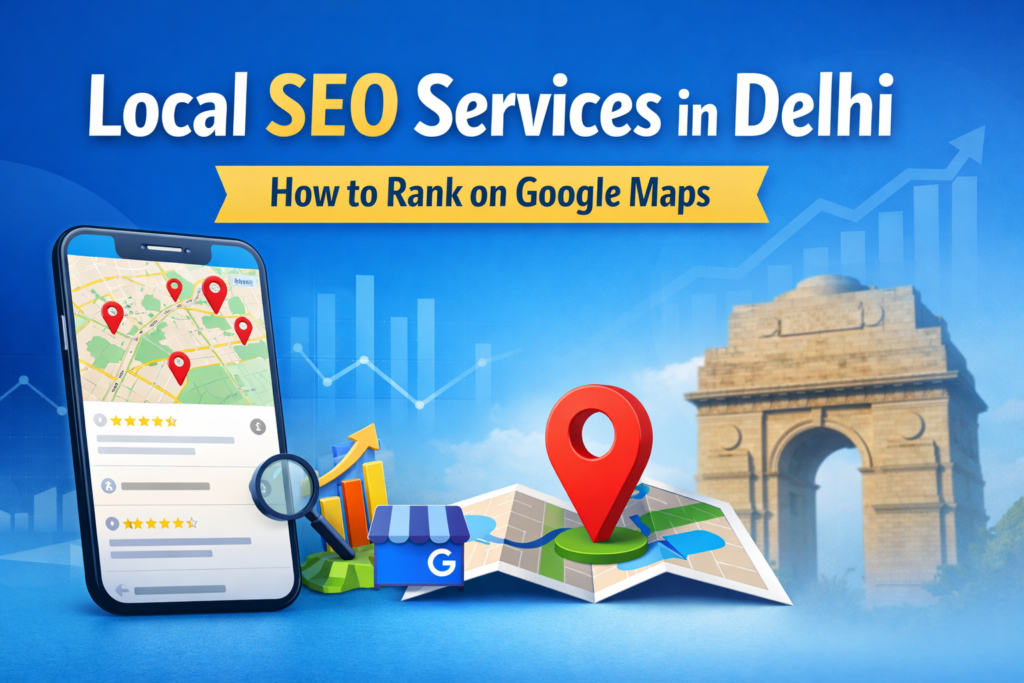
Ranking on Google Maps in Delhi is no longer optional for local businesses. When people search for services, they want fast answers, nearby options, and trusted brands. Google Maps delivers exactly that. If your business does not appear in the local map pack, you lose visibility, leads, and credibility. This is where Local SEO services in Delhi play a crucial role. This refreshed guide explains how Google Maps ranking works today, what truly matters, and how businesses in Delhi can build long-term local visibility the right way. Understanding Local SEO in the Delhi Market Local SEO focuses on improving your online presence for location-based searches. These searches usually include city names, local intent, or “near me” queries. Delhi is highly competitive. Thousands of businesses target the same customers. That competition makes Professional SEO services in Delhi essential rather than optional. Google Maps listings often appear before organic results. Businesses visible there gain more calls, website visits, and walk-ins. This visibility directly impacts revenue. How Google Decides Who Ranks on Google Maps Google uses a clear framework to rank businesses on Maps. There are no shortcuts here. Relevance Google checks how closely your business matches the user’s search.It analyzes: Business category Services listed Business description Website content If your services are unclear, rankings suffer. Distance Google considers how close your business is to the searcher.You cannot manipulate this factor. You can only optimize the rest. Prominence Prominence reflects trust and authority.It depends on: Reviews and ratings Online mentions Website strength Consistent business data Strong Local SEO services in Delhi focus heavily on improving prominence. Google My Business Optimization Delhi: The Core Step Your Google Business Profile acts as your digital storefront. Without proper optimization, ranking becomes difficult. Accurate Business Details Build Trust Always maintain: Correct business name Accurate address or service area Active phone number Verified website Consistency across platforms matters more than many businesses realize. Category Selection Matters More Than Design Your primary category tells Google what your business does.Choose the most accurate category, then add relevant secondary ones. Wrong categories lead to wrong traffic and weak rankings. Writing a Business Description That Helps Rankings Your description should sound natural and informative.Avoid keyword stuffing. Write for humans first. A strong description: Explains your services clearly Mentions Delhi naturally Builds confidence and clarity Mention Google My Business optimization Delhi only where it fits logically. Reviews: The Strongest Local Ranking Signal Reviews influence both rankings and user decisions.Google values genuine feedback and active engagement. Reviews affect: Click-through rate Trust signals Local prominence Best Practices for Reviews Ask real clients for feedback Respond to every review professionally Avoid buying or forcing reviews Google clearly states through Google Search Central that authentic user signals improve search performance. Website Optimization for Google Maps Visibility Your website supports your Maps ranking more than most businesses think. Clear Local Signals on Your Website Your website should include: Location-focused service pages Embedded Google Map Matching NAP details Clear contact information If Google cannot connect your website to your business profile, trust weakens. Creating Location-Focused Pages the Right Way Each major service area should have one strong, helpful page. Avoid thin or duplicate pages.A page targeting Local SEO services in Delhi should: Explain the service in detail Address local business challenges Provide real solutions Include internal links naturally Quality always beats quantity. Citations and Business Listings: Still Relevant Citations help Google verify your business information. Focus on: Local directories Industry-specific platforms Trusted listing websites Consistency is more important than volume.One incorrect listing can dilute authority. Local Content Builds Authority Over Time Local content helps Google understand your relevance in Delhi. Effective local content includes: City-based guides Case studies Problem-solving blog posts Local SEO tips This content supports both Maps and organic rankings naturally. User Engagement Signals Google Tracks Google observes how users interact with your listing. Important signals include: Calls Website clicks Direction requests Time spent Higher engagement tells Google your listing satisfies user intent. Misleading titles may attract clicks once, but they fail long-term. Common Local SEO Mistakes to Avoid Many Delhi businesses lose rankings due to simple errors. Keyword-Stuffed Business Names This often leads to suspension. Ignoring Reviews No response looks unprofessional. Fake Addresses Google detects them quickly. Inconsistent Business Details Trust drops across platforms. Reliable Professional SEO services in Delhi avoid these mistakes completely. How Long Does Google Maps Ranking Take? There is no instant result. Anyone promising that is not honest. General timelines: Initial improvement: 3–4 weeks Stable movement: 2–3 months Competitive niches: up to 6 months Results depend on effort, competition, and consistency. Why Choosing the Right SEO Company in Delhi Matters Local SEO requires ongoing optimization. Algorithms change. Competitors adapt. A reliable SEO company in Delhi: Follows Google guidelines Tracks performance Improves strategy over time Focuses on trust, not tricks Long-term growth beats short-term spikes. Final Thoughts: Sustainable Google Maps Rankings Win Google Maps rankings reward clarity, honesty, and consistency. With proper Google My Business optimization Delhi, a strong website, real reviews, and quality local content, ranking becomes achievable and sustainable. Businesses that invest in genuine Local SEO services in Delhi build trust, visibility, and long-term growth. That is how you win Google Maps the right way. Frequently Asked Questions (FAQs) 1. What are Local SEO services in Delhi? Local SEO services in Delhi help businesses improve their visibility in local search results and Google Maps. These services include Google Business Profile optimization, local keyword targeting, citation management, review optimization, and location-based content to attract nearby customers. 2. How does Google My Business optimization in Delhi improve rankings? Google My Business optimization in Delhi improves rankings by ensuring accurate business information, correct categories, optimized descriptions, regular updates, and genuine customer reviews. These factors help Google understand business relevance and increase trust. 3. How long does it take to rank on Google Maps in Delhi? Ranking on Google Maps in Delhi usually takes between three to six months. The timeline depends on competition, business category, location, and the consistency of local SEO efforts.
Search Engine Optimization Company in the UK: What Services Actually Work
Finding the right search engine optimization company in the UK is not easy. Many agencies promise fast rankings and instant traffic, but only a few deliver results that last. UK businesses often invest in SEO and still fail to see real growth because the services used do not match how search engines work today. This article explains which SEO services actually work, how professional SEO companies apply them, and why these methods align with Google’s ranking guidelines. Why UK Businesses Need Professional SEO Services Search engine optimization helps businesses appear when users actively search for solutions. Unlike paid advertising, SEO focuses on long-term visibility and trust. A reliable search engine optimization company in the UK understands that rankings come from relevance, usability, and authority. According to guidance shared by Google, systems reward pages that help users and demonstrate reliability. This makes SEO services in the UK a strategic investment rather than a short-term tactic. What a Search Engine Optimization Company in the UK Actually Does A professional SEO company does not rely on shortcuts. It builds a structured process that improves a website step by step. The core focus includes: Understanding UK search intent Improving website structure and content Increasing visibility for relevant keywords Supporting conversions, not just traffic This is how a best SEO company in the UK delivers sustainable results. SEO Audit: The Starting Point of Every Campaign An SEO audit forms the foundation of all successful SEO strategies. A proper audit reviews: Website structure and crawlability Indexing and technical errors Content quality and duplication Keyword alignment with search intent Without this analysis, SEO becomes guesswork. Every trusted search engine optimization company in the UK uses audit data to plan realistic improvements. Keyword Research Focused on the UK Market Keyword research works best when it reflects how users in the UK actually search. Effective SEO services UK focus on: Commercial and transactional keywords Location-based search terms Long-tail phrases with clear intent For example, keywords like “SEO services UK” or “best SEO company in UK” often attract decision-makers rather than casual readers. This improves lead quality and conversion rates. On-Page SEO That Supports Users and Search Engines On-page SEO works when it improves clarity. What professional SEO companies focus on: Clear heading structure Short, readable paragraphs Logical internal linking Natural use of keywords A top SEO agency UK avoids keyword stuffing and focuses on content flow. This approach improves engagement and helps search engines understand page relevance. Content Creation That Builds Authority Content is still a major ranking factor, but only when it is useful. SEO content that works: Solves real user problems Explains topics clearly Matches search intent Avoids exaggerated claims A best SEO company in the UK creates content for people first and optimizes it for search engines second. This approach supports trust, authority, and long-term rankings. Technical SEO That Improves Website Performance Technical SEO ensures that a website functions smoothly for users and search engines. Key technical SEO services include: Page speed optimization Mobile usability improvements Secure HTTPS implementation Clean URL and site architecture Strong technical foundations support every other SEO effort. This is why every top SEO agency UK treats technical SEO as an ongoing process. Local SEO Services for UK Businesses For location-based businesses, local SEO delivers consistent results. Effective local SEO services include: Google Business Profile optimization Location-focused landing pages Accurate business citations Review management strategies Local SEO helps businesses appear in searches with strong intent, making it one of the most valuable SEO services UK companies can invest in. Ethical Link Building That Strengthens Authority Links still matter, but only when they are earned naturally. What works today: Industry-relevant backlinks Editorial mentions Content-led outreach Digital PR strategies A professional search engine optimization company in the UK avoids spam links and focuses on credibility. This protects rankings and builds long-term authority. Conversion-Focused SEO Strategy SEO success is not measured by traffic alone. A best SEO company in the UK also optimizes: Page structure Calls to action Trust elements User navigation This ensures visitors understand what to do next. SEO without conversions does not support business growth. SEO Practices That No Longer Work Some SEO methods damage trust and performance. These include: Guaranteed ranking promises Keyword stuffing Low-quality backlinks Thin or duplicated content A reliable top SEO agency UK avoids these practices and follows Google’s published quality guidelines. How to Choose the Best SEO Company in the UK A trustworthy SEO partner will: Explain strategies clearly Share transparent reporting Set realistic expectations Focus on long-term results If an agency avoids explaining its process, that is a clear warning sign. Final Thoughts SEO works when it prioritizes users, clarity, and trust. The most effective search engine optimization company in the UK delivers results through: Strategic keyword research High-quality content Technical excellence Ethical link building Conversion-focused optimization There are no shortcuts that last. Consistent, guideline-based SEO always wins. Frequently Asked Questions (FAQs) 1. What does a search engine optimization company in the UK do? A search engine optimization company in the UK helps businesses improve their visibility on search engines like Google. It focuses on keyword research, technical SEO, content optimization, link building, and user experience to attract relevant traffic and increase conversions. The goal is long-term, sustainable growth rather than quick rankings. 2. How long do SEO services in the UK take to show results? SEO services in the UK usually take 3 to 6 months to show noticeable improvements. The timeline depends on competition, website condition, industry, and strategy. A professional SEO company focuses on steady progress instead of instant results, which aligns with Google’s guidelines. 3. How do I choose the best SEO company in the UK? To choose the best SEO company in the UK, look for clear communication, transparent reporting, realistic timelines, and ethical practices. Avoid agencies that guarantee rankings or hide their methods. A reliable company explains its strategy and focuses on long-term business growth. 4. Are SEO services better than paid ads for UK businesses? SEO services often
Local SEO Tips for Beginners: How to Rank Your Business Locally
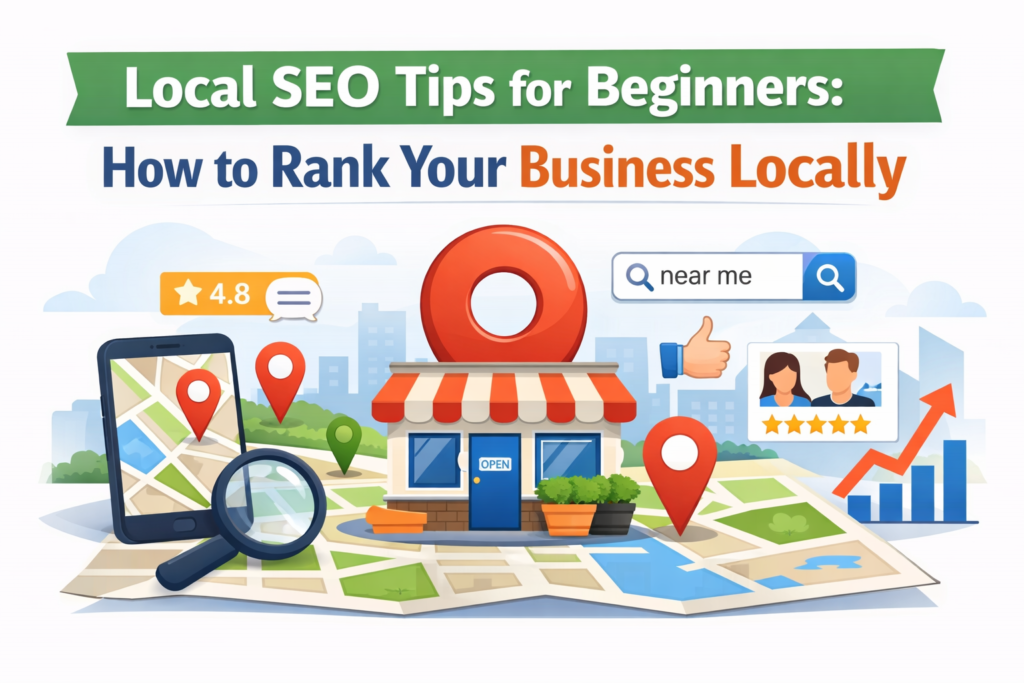
Local SEO helps your business appear when people search for nearby services. If someone types “restaurant near me” or “SEO agency in my city,” Google decides which businesses show up first. That decision matters because most users click one of the top results. This guide explains local SEO tips for beginners in clear and simple language. You do not need technical skills or expensive tools. You only need to understand how Google thinks and how real users behave. Let’s break it down step by step. What Is Local SEO? Local SEO is the process of optimizing your online presence so your business appears in local search results. These results usually show on Google Search and Google Maps. Local SEO focuses on: Location-based searches Nearby customers High-intent traffic If you run a shop, office, or service business, local SEO is essential. Without it, people near you may never find you online. That is why local SEO tips for beginners focus on visibility and trust. Why Local SEO Is Important for Beginners Local SEO works faster than traditional SEO. You do not compete with the entire internet. You compete only with businesses in your area. That makes local SEO tips for beginners easier to understand and easier to implement. Benefits include: More local visibility Higher trust from nearby users Better conversion rates Less competition than national SEO When done correctly, local SEO tips for beginners help attract customers who are ready to take action. How Google Ranks Local Businesses Google uses three main factors to decide which businesses appear in local results. Relevance Google checks how well your business matches the user’s search. Clear descriptions, correct categories, and accurate services improve relevance. Distance Google considers how close your business is to the searcher. You cannot control this factor. Prominence Prominence shows how trusted and well-known your business is. Reviews, online mentions, and consistent information increase prominence. To rank better, local SEO tips for beginners focus on relevance and prominence rather than shortcuts. Set Up and Optimize Your Google Business Profile Your Google Business Profile is the foundation of local SEO. Beginners should start here before doing anything else. Basic setup tips: Use your real business name Choose the correct primary category Add accurate business hours Include your phone number and website Verify your listing An incomplete profile struggles to rank. A complete profile supports local SEO tips for beginners by building trust with Google. Write a Clear Business Description Your business description helps Google understand what you do. Write in simple language. Explain your services clearly. Add keywords naturally without forcing them. Good descriptions: Sound human Explain real services Avoid keyword stuffing This approach aligns perfectly with local SEO tips for beginners and improves user trust. Keep Your Business Information Consistent Consistency is one of the most important local SEO tips for beginners. Your business name, address, and phone number must match everywhere online, including your website, business profile, directories, and social media pages. Even small differences can confuse search engines and reduce rankings. Customer Reviews Matter More Than You Think Reviews influence both rankings and user decisions. Businesses with real reviews: Rank higher Get more clicks Build stronger trust Review best practices: Ask real customers politely Respond to all reviews Stay professional in replies Avoid fake or paid reviews These actions strengthen local SEO tips for beginners by increasing credibility. Website Optimization for Local SEO A website supports your local SEO efforts. Even beginners need a basic website to rank consistently. Your website should: Load fast Work well on mobile devices Clearly explain services Mention your location naturally When your website matches your business profile, How to rank on Google Maps fast become much easier to apply. Use Local Keywords Naturally Keywords help Google understand your content, but overuse hurts rankings. Use keywords in headings, introductions, and relevant paragraphs. Do not repeat them unnecessarily. Search engines prefer content written for humans, which is a core principle of Google Maps SEO for small business Create Location-Based Content Location-based content improves local relevance. Examples include: Services in your city Problems faced by local customers Area-specific solutions This content supports local SEO tips for beginners without sounding forced or artificial. Build Local Citations Carefully Citations are online mentions of your business details. Focus on: Trusted directories Relevant platforms Accurate information High-quality citations support prominence and strengthen local SEO tips for beginners. Final Thoughts Local SEO helps beginners compete with bigger businesses. You do not need advanced tools or deep technical knowledge. You only need clarity, consistency, and real engagement. If you follow these local SEO tips for beginners, your business can gain visibility, trust, and steady local traffic over time. Frequently Asked Questions (FAQs) What is Local SEO and why is it important? Local SEO helps your business appear in local search results when people look for nearby services. It is important because local searches bring customers who are ready to take action, such as calling or visiting your business. How long does Local SEO take to show results? Local SEO usually starts showing results within a few weeks. Strong and stable rankings often take 2 to 3 months, depending on competition and how well your business profile is optimized. How can beginners improve Google Maps ranking? Beginners can improve Google Maps ranking by optimizing their Google Business Profile, keeping business information consistent, collecting genuine customer reviews, and using location-based content naturally. Do reviews really help Local SEO rankings? Yes, reviews strongly help Local SEO. They build trust, increase engagement, and signal Google that real users interact with your business, which improves visibility.
How to Choose the Best SEO Content Writing Company

Choosing the right SEO content writing partner is no longer optional. Content drives rankings, traffic, and trust. But not all content performs well, even if it looks good on the surface. Many businesses invest in content and still fail to rank. The reason is simple. Writing for Google and writing for humans are two different skills. The best SEO content writing company knows how to combine both. This guide helps you make the right decision using logic, real standards, and Google-aligned practices. Why SEO Content Writing Is Critical in 2026 Google no longer rewards content written only for keywords. Its official guidance clearly states that content should be helpful, people-first, and experience-driven. Professional SEO content writing services focus on: Search intent, not just keywords Clear answers, not filler text Structure that helps users scan quickly Content now supports visibility across traditional search and AI-powered search experiences. That makes quality more important than ever. What Separates SEO Content Writing From Regular Writing? Regular writing informs.SEO content writing performs. A professional SEO content writing service understands how content supports: Rankings User engagement Conversions Long-term authority SEO writing blends research, structure, and clarity. When done right, content reads naturally while still signaling relevance to search engines. If content sounds robotic, it fails. If it ignores SEO fundamentals, it disappears. Step 1: Evaluate Their Understanding of Search Intent Search intent decides rankings. A reliable SEO content writing company always starts by identifying intent: Informational (guides, explanations) Commercial (services, comparisons) Transactional (buying decisions) For example, “SEO content writing services” requires service-focused content, not a general definition of SEO writing. If an agency ignores intent, rankings will follow the same path—down. Step 2: Review Their Writing Samples Like a User Do not just check grammar. Read their content carefully. High-quality SEO content: Uses short, readable paragraphs Avoids keyword stuffing Explains ideas clearly Maintains a natural tone A strong SEO content writing agency writes for humans first. Search engines reward that behavior over time. If content feels forced, Google will sense it too. Step 3: Ask How They Use Keywords Smart SEO does not chase density. It builds relevance. Professional SEO content writing services: Place primary keywords naturally Use secondary keywords as support Add contextual variations Avoid repetition for manipulation Google’s own documentation warns against over-optimization. Natural usage always performs better. SEO is strategy, not repetition. Step 4: Check Their Research and Source Standards Trust signals matter. A credible SEO content writing company supports claims using: Google Search Central guidelines Established SEO research platforms Verified industry insights Avoid agencies that add statistics without sources. Fake data damages credibility and weakens EEAT signals. Search engines reward accuracy, not assumptions. Step 5: Confirm Alignment With Google Guidelines Google updates its systems regularly. Content must stay compliant. A professional SEO content writing agency understands: Helpful Content system EEAT principles Spam policies They focus on sustainable rankings, not shortcuts. Agencies that promise instant results often rely on risky practices. Long-term growth always beats short-term spikes. Step 6: Analyze Content Structure and Formatting Structure improves clarity. Effective SEO content uses: Clear H1 for the main topic Logical H2 and H3 sections Bullet points where helpful Scannable formatting This helps users find answers quickly and helps search engines understand topical depth. Good structure improves rankings indirectly through better engagement. Step 7: Assess Tone, Readability, and Flow SEO content should sound human. A strong SEO content writing service: Keeps sentences direct Avoids unnecessary jargon Maintains a professional yet friendly tone Readable content improves dwell time and reduces bounce rate. Both send positive quality signals to Google. Nobody enjoys reading complicated content, including algorithms. Step 8: Ask About Content Optimization Beyond Writing Writing alone is not enough. Professional SEO content writing services also consider: Internal linking opportunities Meta titles and descriptions Featured snippet formatting FAQ-based content structure This turns content into a strategic SEO asset rather than just another article. Optimization multiplies results. Step 9: Industry Understanding Matters Generic content rarely wins competitive SERPs. The best SEO content writing company adapts content based on: Your niche Your audience Your competition Local businesses, SaaS brands, and service providers all need different content approaches. Context shapes credibility. Step 10: Transparency Over Guarantees Be cautious of promises. No ethical SEO content writing agency guarantees: Number one rankings Immediate traffic Fixed timelines SEO depends on many variables. Honest agencies explain realistic expectations and measurable goals. Transparency builds trust. Trust builds results. Common Red Flags to Avoid Avoid a SEO content writing company if they: Overuse keywords unnaturally Rely on copied or spun content Use AI without human review Cannot explain their process Low-quality content creates long-term SEO damage that takes time to fix. Human Expertise Still Leads SEO Content AI supports efficiency, but humans guide quality. The best SEO content writing services use AI for: Research assistance Content structuring Workflow efficiency Humans handle: Logic and judgment Fact verification Tone and intent alignment Google prioritizes people-first content. Human expertise remains essential. Final Checklist Before You Decide Before hiring, ask yourself: Does the content feel trustworthy? Is it written for users, not bots? Does it align with Google guidelines? Does it explain topics clearly? If yes, you have found a reliable partner. The right SEO content writing company helps you build authority, not just publish pages. Final Thoughts Strong SEO content writing builds visibility, credibility, and long-term growth. It supports rankings today and protects your site tomorrow. Good content attracts traffic.Great content earns trust.Trusted content survives updates.
How US Companies Can Increase Organic Traffic
Organic traffic is not dead. It is not declining. And it is definitely not replaced by ads. The ability to increase organic traffic for US companies remains one of the most reliable and cost-effective growth opportunities. The challenge is not whether SEO works. The real challenge is doing SEO the right way. This refreshed guide explains how US companies can increase organic traffic by following ethical SEO practices aligned with Google’s ranking guidelines. The focus stays on logic, clarity, and real-world execution, not shortcuts or hype. What Organic Traffic Really Means in the USA Organic traffic refers to visitors who arrive on your website through unpaid search results. For businesses aiming to increase organic traffic for US companies, understanding the US market is critical because organic search behavior is highly competitive and intent-driven. Users expect accurate answers, trustworthy sources, and fast experiences, which makes it essential to increase organic traffic for US companies by meeting these expectations consistently. Organic traffic growth in the USA depends on three core elements: Relevance to search intent Trust and authority Technical and user experience quality If one of these breaks, rankings struggle. Why Organic Search Traffic Still Wins for US Businesses Paid ads stop the moment budgets pause. Organic traffic keeps working. US companies rely on organic search traffic because it: Builds long-term visibility Attracts high-intent users Improves brand credibility Reduces dependency on ads Organic search traffic in the USA also supports every stage of the funnel, from awareness to conversion. Search Engine Optimization USA: The Bigger Picture Search engine optimization in the USA is not about pleasing algorithms. It is about meeting user expectations at scale. For brands aiming to increase organic traffic for US companies, Google’s systems reward websites that consistently help users. SEO works best when businesses treat it as a long-term strategy to increase organic traffic for US companies, not as a short-term marketing trick. Google Ranking Factors USA: What Google Consistently Rewards Google publicly shares guidance through its Search Central documentation. While it does not reveal exact formulas, it consistently highlights the same priorities. Content That Solves Real Problems Content must answer questions clearly and completely. Thin pages rarely survive competitive US SERPs. Search Intent Alignment Google ranks pages that match why a user is searching, not just what they type. Page Experience Signals Speed, mobile usability, and layout stability matter, especially for US audiences on mobile devices. Authority and Trust Signals Links, brand mentions, and content credibility support rankings over time. Keyword Research for Organic Traffic Growth USA Keyword research remains the backbone of SEO strategies for US businesses. However, many companies still chase high-volume keywords without considering intent. Smart Keyword Strategy Instead of targeting broad terms, focus on: increase organic traffic for US companies how to increase website traffic in the USA SEO strategies for US businesses organic search traffic USA These keywords attract users looking for actionable solutions, not casual browsing. Context Over Density Google understands context. Keywords should fit naturally into sentences and headings. Forced repetition hurts readability and trust. Creating Content That Ranks and Converts Content drives organic traffic, but not all content deserves to rank. Write Like a Human A human reader should understand your content without effort. Short paragraphs, clear sentences, and logical flow improve engagement. Cover Topics Completely Google favors pages that cover topics thoroughly. This does not mean adding fluff. It means answering follow-up questions before users ask them. Structure Matters Clear headers guide readers and search engines. Each section should add value, not repeat the same idea differently. On-Page SEO for US Companies On-page SEO helps Google understand your content and helps users navigate it. Title Tags and Descriptions Titles should reflect real content. Meta descriptions should explain value, not exaggerate promises. Header Optimization Use one H1 per page. Support it with relevant H2 and H3 headings that reflect real subtopics. Internal Linking Internal links distribute authority and help users explore related content naturally. Technical SEO: The Silent Traffic Killer Technical SEO issues often block organic search traffic in the USA without obvious symptoms. Core Technical Areas Mobile responsiveness Page speed optimization Secure HTTPS Clean indexing and crawlability Proper canonical usage Fixing technical SEO often produces faster results than publishing new content. Google SEO for US Businesses: Trust Comes First Google increasingly emphasizes trust, especially for business-related content. How to Build Trust Clear About pages Visible author expertise Accurate contact information Transparent business details Trust improves rankings and conversion rates simultaneously. Building Authority Through Ethical Backlinks Backlinks remain one of the strongest ranking signals, but quality matters more than quantity. What Works in the US Market Editorial mentions Industry-relevant guest contributions Digital PR and expert commentary What Hurts Rankings Paid link schemes Irrelevant directories Automated link building Authority grows when others genuinely reference your content. Local SEO and Organic Traffic Growth USA Local SEO plays a major role for service-based US businesses. Local SEO Essentials Optimized Google Business Profile Consistent NAP details Localized landing pages Customer reviews Local visibility often converts faster than national traffic. Content Updates and Refresh Strategy SEO does not end at publication. Content requires maintenance. Why Refreshing Content Works Improves accuracy Matches evolving search intent Signals freshness to Google Refreshing existing pages often boosts rankings faster than creating new ones. User Experience and Engagement Signals Google monitors how users interact with websites. Improve Engagement By: Using readable typography Keeping layouts clean Avoiding intrusive pop-ups Structuring content logically A good experience keeps users engaged and supports organic growth. SEO Tips for US Companies That Scale Some SEO tips sound good but fail in practice. Focus on strategies that scale. Proven Tips Build topical authority, not isolated pages Group related content into clusters Optimize for mobile first Analyze Search Console data regularly SEO improves when decisions rely on data, not assumptions. Measuring Organic Search Traffic USA Tracking progress ensures SEO efforts stay aligned with goals. Key Metrics to Monitor Impressions and clicks Average position Click-through rate Engagement metrics Google Search Console and Analytics provide reliable data
Google Update Just Hit Your Site? Do This First
If your website traffic dropped suddenly and you did not change anything, you are not alone. Many site owners face this situation after a Google algorithm update. One day rankings look stable, and the next day traffic declines without warning. This does not mean your website is broken. In most cases, Google is simply re-evaluating content quality, relevance, and trust signals. The key is knowing what to do first and what mistakes to avoid. This article explains exactly how to respond when a Google update hit your website, using real SEO logic, verified best practices, and Google’s own guidelines. What Is a Google Algorithm Update? A Google algorithm update is a change in how Google evaluates and ranks web pages. Google releases these updates to improve search results and reward content that genuinely helps users. Some updates are minor and affect very few sites. Others, especially core updates, can create a noticeable Google core update impact across many industries. Important point:Most updates are not penalties. They are ranking adjustments based on quality signals. How to Confirm Your Website Was Affected by a Google Update Before taking action, confirm that the drop aligns with an update. You may be dealing with a website affected by Google update if you notice: A sudden traffic drop across multiple pages Ranking losses for many keywords No manual action in Google Search Console Traffic decline matching known update dates If you are thinking, “Google update just hit my site,” timing and data will confirm it. First Step: Stop and Analyze The biggest mistake website owners make is reacting too fast. Deleting pages, changing URLs, or rewriting everything often causes more damage. When a Google update hit my website, the correct first step is analysis, not action. Step 1: Review Search Console and Analytics Data Start with facts. Check: Google Search Console performance reports Clicks, impressions, and average position changes Pages that lost the most traffic Queries that declined across the site This data tells you where Google changed its evaluation. Step 2: Identify the Type of Impact Not all traffic drops mean the same thing. Ask: Is the drop sitewide or page-specific? Did informational pages lose more traffic? Did Discover traffic disappear while search stayed stable? Each pattern points to different issues such as content quality, intent mismatch, or trust signals. Step 3: Re-evaluate Content Quality Honestly Google core updates strongly focus on content quality. For each important page, ask: Does this page fully answer the user’s question? Is the content original and useful? Does it demonstrate real expertise? Would I trust this page as a user? If the content feels generic or shallow, Google likely noticed it too. Why E-E-A-T Matters After a Google Update Google evaluates Experience, Expertise, Authoritativeness, and Trust. To strengthen these signals: Add clear author information Show credentials or experience where relevant Update outdated facts Cite reliable sources naturally Improving E-E-A-T is one of the most effective answers to what to do after Google algorithm update. Step 4: Check Search Intent Changes Many ranking drops happen because search intent evolves. For example: A keyword becomes informational Your page remains transactional Review the current top-ranking pages and compare: Content depth Structure and format Topic coverage If Google shifted intent, your content must adapt. Step 5: Perform a Technical SEO Health Check Technical issues do not always cause traffic drops, but they can block recovery. Check: Indexing and coverage errors Core Web Vitals Mobile usability Canonical and duplicate content issues Crawl errors Fixing these issues supports long-term recovery. Step 6: Study the Pages That Replaced You Google did not remove your rankings randomly. It promoted other pages instead. Analyze: Content quality of competitors Authority signals Internal linking structure Topical depth Understanding why others rank helps you close the gap. Step 7: Improve Existing Content Instead of Deleting It Deleting content rarely helps. Better approach: Expand thin sections Remove unnecessary filler Improve clarity and structure Add missing answers users expect Google prefers improved content over replaced content. Step 8: Build Topical Authority Across the Site Google now evaluates websites by topic, not just individual pages. To build authority: Cover related subtopics in depth Use logical internal linking Avoid isolated, thin articles A site that demonstrates topic mastery recovers faster. Step 9: Review Backlink Quality Carefully Core updates do not target links directly, but weak link profiles limit recovery. Focus on: Relevant, natural links Brand mentions Editorial references Avoid aggressive or spammy link building. How Long Does Recovery Take? Recovery depends on the severity of the impact and the quality of improvements. General timelines: Minor drops: a few weeks Core update impact: one or more update cycles Trust-related issues: longer but more stable once fixed Consistency matters more than speed. Common Myths After Google Updates Google did not manually penalize most sites More backlinks are not always the solution Deleting content usually makes things worse Recovery comes from improvement, not shortcuts. Final Action Checklist If a Google update hit your website, do this first: Confirm update timing Analyze affected pages Improve content quality Match search intent Strengthen E-E-A-T Fix technical issues Build topical authority Stay patient and consistent Final Thoughts A Google algorithm update does not end a website. It highlights weaknesses that can be fixed. Sites that recover focus on clarity, usefulness, and trust. When you improve for users, Google follows. That principle has not changed. Frequently Asked Questions (FAQs) 1. Why did my website traffic drop after a Google algorithm update? Website traffic often drops after a Google algorithm update because Google re-evaluates content quality, relevance, and trust signals. This does not mean your site is penalized. In most cases, Google adjusts rankings to promote content that better matches user intent and quality standards. 2. How long does it take to recover from a Google core update impact? Recovery time depends on the severity of the impact and the improvements made. Minor ranking drops may recover within a few weeks, while sites heavily affected by a Google core update may need
Why Most Websites Fail to Rank on Google
Every website owner reaches this moment. You build a site. You publish content. You wait. But the site not ranking on Google. That’s when the real questions start: Why my website is not ranking? What went wrong? And how do others appear on page one while you stay invisible? The truth is simple. Most Google ranking problems come from common SEO mistakes, not bad luck. Once you understand the real reasons websites don’t rank on Google, fixing them becomes much easier. Let’s break everything down clearly. How Google Actually Ranks Websites Google’s main goal is to show users the most helpful and reliable result. It studies relevance, content quality, website trust, and user experience. If your page does not match search intent, Google will not rank it high. If another page answers the query better, that page wins. So when you say, “Why my website is not ranking?”, the answer usually falls into one of three categories: Google cannot find your page Google does not understand your page Google does not trust your page Now let’s solve each one. 1. Your Pages Are Not Properly Indexed If Google does not index a page, it cannot rank it. This is one of the most common SEO issues that hurt rankings. Typical causes: Robots.txt blocking Googlebot Noindex tag added by mistake Missing XML sitemap Broken internal links This problem is very common for beginners and new websites. Fix Check page status in Google Search Console Submit a sitemap Remove accidental noindex tags Fix internal linking structure No index means no ranking. Always start here when a site not ranking on Google. 2. Technical SEO Problems Are Holding You Back Technical SEO forms the base of your website. If this base is weak, everything else struggles. Common technical SEO errors: Slow loading speed Poor mobile design 404 pages and broken links Missing HTTPS security Messy URL structure These are silent Google ranking problems. Google prefers websites that load fast and work smoothly on all devices. Fix Optimize images Enable caching Use quality hosting Run regular technical audits Clean technical SEO builds trust with search engines. 3. Content That Lacks Real Value One of the biggest reasons websites don’t rank on Google is weak content. Google promotes content that: Answers real user questions Provides clear solutions Shows experience and knowledge Pages with thin, copied, or outdated content struggle to rank. This is where many beginners fail. They write for search engines instead of writing for humans. Fix Write helpful and original content Match search intent Keep paragraphs short and clear Update old content regularly Strong content solves half of your SEO problems. 4. Wrong Keyword Strategy Another common SEO mistake is targeting the wrong keywords. New site owners often target highly competitive terms. Then they ask: Why my website is not ranking? A smarter approach uses long-tail keywords. These attract targeted traffic and are easier to rank. Examples: Why new websites don’t rank on Google Biggest SEO mistakes beginners make These phrases bring real users with real intent. Fix Use focused long-tail keywords Avoid extremely competitive terms Place keywords naturally in content Good keyword strategy removes many Google ranking problems. 5. Low Website Authority Google trusts websites that earn authority over time. Authority comes from: Quality backlinks Brand mentions Consistent publishing User engagement If your site has no backlinks, Google has no reason to trust it. Fix Create shareable content Do guest posting Build relationships in your niche Authority grows slowly, but it is essential for long-term rankings. 6. Poor User Experience User experience directly affects SEO. Bad signals include: Visitors leaving quickly Hard-to-read pages Confusing navigation Slow page speed Google watches user behavior. If users dislike your site, rankings drop. Fix Simple navigation Clean design Fast loading pages Mobile-friendly layout Great user experience supports strong rankings. 7. Strong Competition Sometimes your content is good, but competitors perform better. They may have: More backlinks Better content depth Higher domain authority Google ranks pages comparatively. You must offer more value than competing pages. Fix Study top-ranking pages Improve your content quality Offer unique insights Outperforming competitors solves many ranking issues. 8. New Website Delay Many people ask: Why new websites don’t rank on Google? New domains need time to: Get fully indexed Build authority Earn backlinks Gain trust signals This delay is normal. SEO is a long-term strategy. Fix Publish consistently Optimize regularly Stay patient Time plus quality leads to rankings. 9. Outdated SEO Tactics Some biggest SEO mistakes beginners make include: Keyword stuffing Spammy backlinks Hidden text Auto-generated low-quality pages These outdated methods harm rankings instead of helping. Fix Write naturally Avoid shortcuts Focus on user-first content Modern SEO rewards honesty and value. 10. Algorithm Updates Google updates its ranking systems frequently. If rankings suddenly drop, an update may have changed ranking signals. Fix Follow SEO news Focus on quality and relevance Avoid risky tactics Websites with strong foundations survive updates. Quick Checklist for Fixing Google Ranking Problems Check indexing status Fix technical SEO errors Improve content quality Use smart keyword strategy Build quality backlinks Improve user experience Stay consistent This checklist solves most SEO issues that hurt rankings. Conclusion If your site not ranking on Google, don’t panic. Most reasons websites don’t rank on Google are simple and fixable. Focus on: Proper indexing Strong technical SEO Valuable content Smart keywords Growing authority Excellent user experience Stay consistent. Avoid shortcuts. Build real value. Rankings will follow. Frequently Asked Questions (FAQ) Why is my site not ranking on Google? The most common reasons include indexing problems, weak content, technical SEO errors, low website authority, or targeting the wrong keywords. Check Google Search Console first to confirm your pages are indexed. What are the main reasons websites don’t rank on Google? Key reasons websites don’t rank on Google include poor technical SEO, slow page speed, thin content, lack of backlinks, bad user experience, and high competition in the target keyword space. How long does it take for a new website to rank on Google? Many
SEO Traffic Boost: The One Change That Can Increase Traffic Overnight
Every website owner wants more traffic. Some expect slow, steady growth. Others dream of waking up to a sudden flood of visitors from Google. While SEO usually takes time, certain actions can deliver an SEO traffic boost much faster than most people expect. No shortcuts. No risky tricks. Just smart optimization based on how search engines actually work. In this guide, you’ll learn quick SEO fixes for more traffic, technical SEO fixes that unlock hidden performance, and the fastest way to improve SEO without putting your site at risk. If you’ve ever wondered how to increase traffic in one day, this article will give you realistic answers. The Truth About “Overnight” SEO Results Let’s clear the air. SEO is not instant. Google needs time to crawl, index, and evaluate content. This process is explained in Google Search Central’s official documentation on how Search works. Rankings change after Google processes new signals, not the second you press “publish”. However — and this is important — many websites already have: Decent content Existing authority Indexed pages But hidden technical mistakes block their performance. When those mistakes are fixed, Google can reprocess the site quickly. In these cases, instant SEO improvement is not a fantasy. It’s a correction. Think of it like a roadblock on a highway. Cars are ready to move, but something is in the way. Remove the obstacle, and traffic flows again. That’s how an SEO traffic boost can happen fast. The #1 SEO Change That Can Increase Traffic Overnight Fix Crawl and Indexing Issues If Google cannot crawl or index your pages, your content won’t appear in search results — no matter how good it is. This is the most powerful technical SEO fix and often the fastest way to improve SEO. Common indexing problems include: Robots.txt accidentally blocking important pages Noindex tags added by mistake Broken internal links Wrong canonical tags Redirect loops or long redirect chains Google clearly states that pages must be crawlable and indexable to be eligible for ranking. When you fix these issues and request reindexing in Google Search Console, Google can reprocess your pages quickly. Many websites lose traffic overnight due to a tiny technical change. Fix that change, and traffic can return just as fast. That’s a real SEO traffic boost — not a trick. Why Technical SEO Fixes Create Fast Results Content-based SEO improvements take time. Technical SEO fixes remove barriers. When barriers disappear, existing content can finally perform. This is why technical SEO fixes are often responsible for instant SEO improvement. Examples include: Restoring accidentally deindexed pages Fixing canonical tags that pointed to the wrong URL Repairing broken sitemap submissions Correcting server errors (5xx pages) Solving mobile usability issues These are small SEO changes that boost traffic because they let Google access what was already there. Quick SEO Fixes for More Traffic Let’s explore practical actions that increase website traffic fast without rebuilding your entire site. 1) Improve Page Speed Google confirmed that page experience and Core Web Vitals influence rankings. Slow websites frustrate users and waste crawl budget. Quick improvements include: Compressing oversized images Enabling browser caching Minifying CSS and JavaScript Reducing unnecessary plugins Using faster hosting When pages load faster: Users stay longer Bounce rates drop Engagement improves These signals support better rankings. This is one of the easiest quick SEO fixes for more traffic. 2) Repair Broken Internal Links Internal links guide both users and search engine crawlers. Broken links interrupt navigation and weaken site structure. Fixing them: Improves crawl efficiency Distributes page authority correctly Helps Google discover deeper pages Once fixed, Google can re-crawl your site more effectively, often leading to ranking recovery. Another small SEO change that boosts traffic. 3) Rewrite Title Tags for Higher Clicks Sometimes your page ranks — but searchers don’t click. A weak title tag wastes ranking potential. Optimizing title tags with: Clear intent Natural keyword placement Strong value message can increase click-through rate. Higher CTR sends positive engagement signals, which can improve Google rankings quickly. This is a simple instant SEO improvement that doesn’t require writing new content. 4) Refresh Existing Content Google rewards freshness when it adds value. Updating old content by: Adding current information Improving readability Updating screenshots or steps Strengthening internal linking can revive lost rankings. Because the URL already has authority, refreshed pages often perform faster than brand-new ones. A proven small SEO change that boosts traffic. 5) Match Search Intent Even well-written content fails if it doesn’t match what users want. Search intent usually falls into: Informational Navigational Commercial Transactional If your content format doesn’t match intent, rankings suffer. Adjusting structure, headings, and answers to align with intent helps improve Google rankings quickly. This is core Helpful Content optimization. The Fastest Way to Improve SEO for Existing Websites If your website already has some authority, these steps create rapid impact: Audit Google Search Console for indexing errors Fix robots.txt and noindex mistakes Repair broken internal links Improve page speed Refresh top-performing content Rewrite weak title tags Submit updated XML sitemap Request reindexing This combination is often the fastest way to improve SEO without waiting months. How to Increase Traffic in One Day: Realistic Scenarios Let’s talk real situations where traffic returns fast. Accidentally added noindex → removed → rankings restored Robots.txt blocked key pages → fixed → pages reindexed Canonical pointed wrong URL → corrected → visibility returned Sitemap broken → resubmitted → faster discovery Internal links deleted → restored → crawl flow recovered If your site had rankings before, fixing these problems can increase website traffic fast — sometimes within one day. That’s how to increase traffic in one day the right way. Avoid Fake “Instant SEO Improvement” Services Some agencies promise overnight rankings using: Bulk backlink blasts Keyword stuffing AI-spun articles Fake traffic bots Google’s Spam Policies warn clearly against these practices. They may cause short-term spikes, followed by long-term penalties. Real SEO traffic boost comes from solving real problems — not gaming the system. Why E-E-A-T Matters After Quick Wins Quick